
By David Mantell
Wrestling Heritage welcomes memories, further information and corrections.
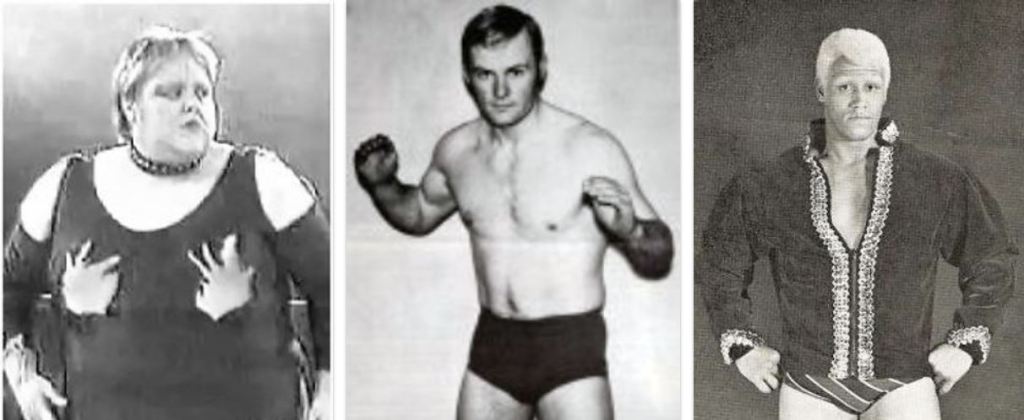
By this point All Star, the former Wrestling Enterprises of Birkenhead, was ready to move its war to depose Joint Promotions’ dominance up a notch.
Over the past few years Brian Dixon had poached quite a lot of the Crabtrees’ top stars and title holders along with the belts they wore, to the point where they, rather than the major league promotion had the upper hand in terms of having the hottest scene going in the country. Now All Star adopted a new policy of running shows toe to toe with Joint, deliberately booking shows in the same town, often on the same night, in order to steal away as much of the non-kiddy audience of the Big Daddy roadshow as they possibly could. This stage of the inter-promotional war was a new phenomenon for the British scene. Traditionally it had always been Joint that was chasing the outlaw promoters around, trying to run them out of business and stomp on them like scurrying rats. Now here was an indie promotion doing everything it could to needle Joint all the way and pick fights with the number one promotion – mainly with the intention of winning the fights. The purpose of this town to town campaign was ultimately to turn All Star actually into a bigger live promotion than Joint and not so much to bolster their claim for a share of TV time as to make Joint’s claim for a continued monopoly look utterly ridiculous (and the original five year extension on their monopoly look like a dreadful mistake.) It was a changing time already for ITV Wrestling – with World Of Sport coming to an end that Autumn, wrestling had a stand-alone show (first aired 5th October) for the first time since the demise of the late night ITV slot roughly a decade earlier. With his campaign of guerilla warfare, Dixon was determined to force bigger brasher changes to the scene through. Or perhaps he saw the loss of WoS as being the writing on the wall for the ITV coverage and reckoned that getting his foot in the major league door was now a matter of urgency.
Some might see promotional wars as being utterly wrong-headed affairs which split the wrestling market and cause both sides to suffer, but it cannot be denied that Brian Dixon achieved his aim. Not only would he eventually get on TV in 1987 (as we shall see in two chapters time) but it would even get him a TV show on satellite TV (as we shall see next chapter.)
A side effect of S4C’s Reslo, started in 1982, was to turn rural southern/eastern Ireland in the late ’80s/early 90s into a great place to be a wrestling fan. With many Irish people having a TV aerial pointed Eastwards to pick up British TV, the signal they got most easily was the HTV Wales/West area signals with S4C instead of Channel 4. Consequently, Reslo gained a big viewership in Ireland and naturally enough this resulted in regular Irish tours for Orig’s BWF featuring many top UK stars, not least the Irish descended Giant Haystacks who would use the occasion to live out his fantasies of being the traditional red scarf wearing hardest man in the village. Haystacks and Ireland were quite the hot combination this year – Stax and Mighty John Quinn would have a major World Heavyweight title match this year in Claremorris County Mayo. Although RTÉ had never given the local wrestling (promoted by the likes of Dave Finlay Senior) a look in, local comedian Derek Davis, himself quite the heavyweight, hosted the contract signing ceremony for the big fight on his show on the station Davis At Large. Quinn, having won back the title from Tony StClair late the previous year, survived the encounter with his title intact (and had another bout with Stax in Germany that year, of which black and white footage has been posted to Youtube) before going down firstly briefly to St Clair again then more permanently to Wayne Bridges, the man he first beat for the title.
The big blow-off rematch which had been so hyped five years earlier and which had caused Bridges to demand of Quinn to “Name The Day – You’ve Got Ninety” finally took place well away from any TV coverage at Hanley’s Victoria Hall on 20th May 1985; after a long spell as a heel chasing StClair, a once again blue-eyed Bridges finally got his revenge by beating the Canadian in a unification match for his own splinter version and MJQ’s original version which date back to the one his “friend” and fellow Brit hater (and fellow ex Capitol WWWF star) Spiros Arion had arrived in the country claiming in 1979.
So with all this heavyweight title action going on for Dixon and Orig, Joint were probably feeling at a bit of a loose end. StClair had taken his British title over to Dixon a few years earlier and so, despite the earlier experience of creating a replacement World title for Bridges only for him to go chasing off to All Star in search of the original, Joint and ITV decided to end 19 years of undisputed status for the British Heavyweight title and create a splinter version so that at least some sort of televised Heavyweight title matches could be held. And so it was that early in the year Pat Roach won a tournament to determine a new champion – only to months later decide to vacate the belt! Undeterred, Joint held another tournament which came down to finalists Ray Steele and Pete Roberts. Their match in Croydon in May that year saw Steele become champion. Steele was soon able to give ITV a televised title defence against Colin Joynson (now quite a reformed character since his Dangermen days, the last of his heelishness having been bled out of him by Arion in ’79).
Roberts meanwhile did his part to keep the new title competitive by beating Steele 2-1 in the final round of a televised non title match from High Wycombe that autumn, transmitted on the first stand-alone broadcast. The resulting championship match ended in a double knockout, thus raising the hope for future title bouts. This was a classic match which did a lot of good to help promote the new title, bringing back memories of athletic of heavyweights who could, as the saying went, “move like lightweights.”
However this was Joint and at the end of the day there was only one heavyweight who truly ruled the roost and he was the promoter’s brother and so sure enough there he was after the break, teaming with Steve Grey to face that most unlovable of heels Syd Cooper (himself a champion that year as we shall see) and the infamous paint-headed “Man Who Will (Not) Beat Big Daddy,” Tiny (no relation to Jim) Callaghan.
Mostly for Daddy it was just another year battling Charlie McGee’s army of Cooper, Callaghan, ex-masked Marauders Daly/Gordon/Mulligan and most prominently this year The Rockers – not Michaels and Jannetty who were at this point still working different US territories but veteran leathered up motorbiking tag team Pete Lapaque and Tommy Lorne, now bereft of third man the masked Battlestar (Barry Douglas moonlighting as a villain) and looking to avenge their triple tag team defeat to Daddy from a couple of years earlier. Like the Cup final itself (between the previous two years’ winners Man U and Everton), this years’s Cup Final Daddy tag was a match-up of previous winners. At a March TV taping in Cannock (screened over the two weeks preceding FA Cup Final weekend), the groundwork was laid as The Rockers defeated Nipper Ernie Riley and Ian McGregor and so rescued Daddy from having to face the two brilliant young stars whose classic clean technical matches had done so much to brighten up the previous year. on the same taping, Daddy and a new, chunkier than usual partner, that Scottish-born Doncaster living veteran with a name like a promoter’s rip off scheme (and one day referee in a kilt on Eurosport’s New Catch) Mick McMichael beat the Emperor and Cooper with the former losing his mask but keeping his secret identity as Bill Bromley intact by managing to run out of the hall with his face in his hands without tripping over anything. (Some lucky punter got a great souvenir of the evening as Daddy threw the mask into the crowd, presumably never to be seen again.) Towards the end of the match, the Rockers and McGee, the latter in a pink hippy-ish scarf-cum-headband reminiscent of something his US role model Captain Lou Albano would have worn, came down to ringside to heckle Daddy. At the Cup final TV Taping however, the Rockers were inevitably humbled, starting right from the outset when McGee and a bearded second working Daddy’s corner made the mistake of dressing identically. McMichael, as in the Emperor/Cooper bout, would manage to get a fall in on his own account, while Daddy celebrated by drinking up a big bottle of water and spouting it out all over McGee’s face, which caused my mum to switch off the TV in disgust. In the end, the Rockers thought they had got a KO win over McMichael and were over celebrating by the ropes when in fact he had tagged Daddy in who crept up behind them and dumped both Rockers over the rope for the win. Tragically, this was to be the end of their pursuit of Daddy as shortly afterwards while they were driving home from a bout, a car crash claimed Lorne’s life and put Lapaque out of action for some considerable time.
On a more cheerful note, this year excrement just got real for British Welterweight champion Danny Boy Collins, the teenager who had given Jim Breaks a scare in 1983 and then returned to completely wipe him out in 1984 (not that Cry Baby Breaks was complaining for too long this time, as he beat Johnny Saint for the World lightweight title triggering off a year-long three way trade with the belt between himself, Saint and Jon Cortez.) After a couple of losses and regains to Steve Grey (including one teary-eyed televised loss and regain) and a bitter feud with signet ringed Mike Bennett that would spill into Daddy tags and a Bennett feud with referee Jeff Kaye, opportunity truly knocked for the High Flying Teenage Sensation (TM). German star Jorg Chenok arrived on our screens as Baron Von Chenok, owner of the European Welterweight title, a title last heard of on these shores being stripped from Dynamite Kid along with the British belt now round Collins’ waist before Mr Billington headed off to Calgary for new adventures with the Harts of Stampede, but which Kent Walton informed us Chenok had won four years earlier from Wolfgang Saturski (aka Wolfgang Stark, the son of Rudi Saturski) and since defended four times. Described in one programme from the time as “tough but fair”, the moustachioed Baron eventually went down 2-1 to Danny Boy in front of the Cup final TV cameras (and with his mum and dad both in the audience in bizarre fancy dress.) after Collins feigned an injury from a missed flying move to lure Chenok into being caught in a flying mare and cross press for the winning fall. Even bigger news for Danny was that this title win was as part of a cross European promotional deal that would see him travel around France and Northern Spain for FFCP promoter Roger Delaporte and building up a major French fan following still in evidence on his early 1990s appearances on Eurosport’s New Catch and would even get him professionally videoed bookings in Germany as late as 2001 when he was a thirtysomething heel whose career was winding down. Of course like Kid before him Danny was not going to be allowed to saunter off overseas carrying the British Welterweight title with him. And so, as noted above, the night after the Watford TV taping, Danny went home to Bristol and dropped his British Welterweight title off for safekeeping with Cooper – a just reward to Cyanide Syd after a long career of making other wrestlers look good. His summer on the continent over, Danny came back to Britain to regain the belt from Cooper and resume life as double crown Welterweight champion. In future summers, Max Crabtree would trust Danny enough to leave the belt on him – and more fool Max as Collins eventually went off to Brian Dixon with both belts in 1988 and promptly vacated the British title to move up the weights!
Other title action this year saw Alan Kilby move up a weight and win the British Light-Heavyweight title left vacant by Marty Jones, beating the new Steve Logan in a tournament final just as Ernie Riley had done to the Iron Man original in 1952. Riley’s one time Wigan snake pit student Steve Wright was due to come over to challenge Jones for his recently regained World Mid Heavyweight title (and would win it from him a year later while disguised as goose-stepping “German” Bull Blitzer) but mercifully for Jones could not make it and was replaced in the championship match by former champion Fit Finlay’s Riot Squad tag team partner Skull Murphy. Murphy would get another title chance later in the year when he beat Alan Kilby in a non title match only to squander the resulting championship chance on a DQ, while Jones would go on to make a successful title defence against Caswell Martin, the Antiguan against whom he had refused a technical KO win after a classic match at the Royal Albert Hall five years earlier. Martin’s fellow West Indian Iron Fist Clive Myers would beat former Commonwealth Games Greco Roman medallist Keith Hayward for his European Middleweight title, formerly held by Mick McManus, as part of another three way trade with Hayward and McManus’ conqueror from ’78, Superstar Mal Sanders. This would continue for a good few years as Myers and Hayward drifted over to All Star followed by Sanders. Chic Cullen meanwhile, after taking both Jones and Martin to 1-1 draws, would head over to All Star and dethrone Rollerball Rocco for his World Heavy Middleweight title in October only to lose it back a month later. Cullen would eventually regain the title in the early 90s and hold it until his retirement in the early naughties.
Murphy’s old partner Finlay, recalling his Cup Final loss to Daddy the previous year, would walk out on a Daddy tag match seconds before the start and be replaced by fellow Irishman Lucky Gordon, thus starting a feud with Daddy that would run on to another cup final match between the two. It wasn’t all doom and gloom for the Riot Squad though, as the duo got to thoroughly beat up on a new prospect from Blackpool, future tape trader Steve Fury, who was teaming with Ringo Rigby, back in the UK after a crack at an American career under the wing of Chris Adams (by now a heel down in World Class feuding with real life childhood penpal Kevin Von Erich.) Finlay got to indulge in more rookie bashing when he handed out a thorough mauling to future early 1990s comedy heel par excellence Soldier Boy Steve Prince, at this point light years away from his loaded boot and just a young blue eye billed as the Black Prince. Prince would eventually make it to the British Welterweight title in the early/mid 1990s. Another future British champion Richie Brooks also got his TV breakthrough this year. His “man who fights fire with fire” days still well ahead of him, young Brooks (not to be confused with Robbie Brookside) was busy being a clean cut Big Daddy tag partner, which would bring him some Finlay trouble as we will see next year. The brightest star in the sky for British Wrestling however was the Broadcasting satellite Intelsat which hosted Screensport before its later move to Astra and merger with Eurosport. The new year was to bring All Star finally back to the ITV negotiating table after its guerrilla raids on Joint’s live audiences up and down the country, but even before that they got their own show when the WHSmith-owned channel decided to add some home grown matches to its imported AWA tapes from co-founders ESPN. The new year would be the end of Joint’s national TV hegemony and perhaps not even that. Even more importantly, old wars would end and new wars would begin – and the biggest and most mysterious ring legend of them all would start getting ready to come back to the ring.
Rasit Huseyin Joins In
In January at Keighley, Marty Jones was due to face Steve Wright for the World Mid-Heavyweight title, but Wright didn’t turn up and was replaced by Skull Murphy, who faced Jones in a brutal match at Aylesbury.
In February at Walsall, Alan Kilby wins the British Light-Heavyweight title, defeating Steve Logan.
In March at Croydon, in one of the most one-sided bouts ever, Fit Finlay pulverised The Black Prince (latterly Soldier Boy Steve Prince). At Warrington, Danny Collins defeats new arch-rival Marvellous Mike Bennet via a disqualification, the decision infuriates Bennett, who then challenges referee Jeff Kaye to a match, a challenge which Kaye accepts.
In Halifax at the end of April, Chic Cullen holds the heavier Caswell Martin to a draw in a rematch after a double knockout verdict in an earlier bout at Walsall. Fit Finlay and Skull Murphy revive their “Riot Squad” tag team, defeating Ringo Rigby and rookie Steve Fury, Fury being brutalised by both members of the Riot Squad before being KO’d by a piledriver from Finlay.
At Cannock in May Chic Cullen makes his last appearance on TV for a year, his match against Marty Jones ending in a no contest. In a tag team contest, “The Rockers” Pete Lapaque and Tommy Lorne beat Eddie Riley and Ian McGregor. The prize for winning the bout? Yes, a bout on Cup Final Day against Big Daddy.
At Croydon, though not televised, Clive Myers beat Keith Haward for the European Middleweight title, and Ray Steele beat Pete Roberts in Dale Martins’ new version of the British Heavyweight title. Also in May at Watford Town Hall, Danny Collins becomes the European Welterweight Champion, beating Austrian Baron Von Chenok. Big Dady and Mick McMichael defeat “The Rockers” on Cup Final day, which was to be The Rockers last appearance on TV, Tommy Lorne tragically being killled in a car crash returning from a show in East Anglia. Lapaque was badly injured in the crash, but recovered and returned to the ring eventually.
Fit Finlay beats Roy Scott in another one sided bout, a bout which frankly did not do Dale Martin Promotions any favours.
At Hyde, Manchester in June, Giant Haystacks makes his last appearnce on TV for just over a year, beating the much lighter Marty Jones. At Slough, Skull Murphy defeats Alan Kilby to earn a shot at the British Light-Heavyweight title. Steve Grey successfully defends his British Lightweight Title against Rick Wiseman, Grey’s experience proving too much for Wiseman, Grey winning the match 2-0.
Johnny Kincaid returns to the small screen for the first time since 1978, reverting to being a face after being a heel in 1977-78, as part of the controversial “Caribbean Sunshine Boys” tag team with Dave “Butcher” Bond.
At Alfreton Alan Kilby successfully hold off the challenge of Skull Murphy, the man they call “indestructible” self-destructed and ended up being disqualified. In September at Telford, Johnny Kincaid beats Beau Jack Rowlands in a 4 man knockout tournament, the other semi final was between bitter rivals Marty Jones and Fit Finlay. Finlay won a volatile and ill-tempered match via a disqualification verdict, both men had two public warnings but Jones threw a left hook at Finlay after the bell had gone for the end of the round, and was disqualified. The final was won by Finlay, who beat Kincaid after Kincaid suffered an arm injury.
At Rugby on 28th September, the last ever World of Sport bill was broadcast, World of Sport was axed by ITV but wrestling still enjoyed high ratings from viewers, and survived the axe. The new Wrestling show was shifted from it’s traditional teatime slot to a lunchtime slot, which see-sawed between 12.00 and 1.30 for the next 3 years.
The first bill of the lunchtime wrestling programme came from High Wycombe, not surprisingly featuring Big Daddy, who along with Steve Grey defeated Tiny Callaghan (with the grotesque face painting) and Sid Cooper. Daddy is also challenged to a bout by Fit Finlay at the end. Pete Roberts beat Ray Steele in a superb heavyweight contest to earn a crack at Steele’s British Heavyweight title, and Clive Myers beat Marvellous Mike Bennett via a disqualification verdict.
At Rickmansworth in October, Richie Brooks made his TV debut, beating Tally Ho Kaye by a disqualification. Danny Collins holds on to the British Welterweight title, holding off the challenge of veteran Mike Flash Jordan, who returned to the small screen after a six year absence.
Marty Jones signs a contract for a World Mid-Heavyweight title clash against Caswell Martin, after he annihilated the hapless Digger Nolan. At St Helen’s in November, Ray Steele and Pete Roberts battle for the right to become the British Heavyweight Champion, the match ended in a double knockout verdict. Fit Finlay refuses to face Big Daddy in a tag match, running off just before the start, and Lucky Gordon steps in to replace Finlay as Scrubber Daly’s tag partner. At Coalville at the end of November, a battle royal ends with two men still standing, bitter welterweight rivals Danny Collins and Mike Bennett.
Marty Jones successfully defends his World Mid-Heavyweight title, holding off the challenge of Caswell Martin. At Battersea in the last show of the year, Big Daddy and Danny Collins beat Bully Boy Muir and Mike Bennett, and Indio Guajaro returns to the UK after an 11 year absence to take on Pete Roberts, Gujaro winning it on a technical knockout, MC Paul Chalmers’ attempt tos pronounce Guajaro’s name producing a few giggles as well. Steve Grey beats Mike Flash Jordan for the British lightweight title, Jordan forced to retire hurt after landing badly outside the ring.
 Wrestling Heritage