
Wrestling Heritage welcomes memories, further information and corrections.
By 1970 the slow decline of British wrestling had begun. Fewer fans were handing over their money at the ticket office with the consequent reduction of shows around the country. The Joint Promotion visionaries who had contributed so much to professional wrestling now had their eyes set firmly on retirement. It was time for a breath of fresh air.
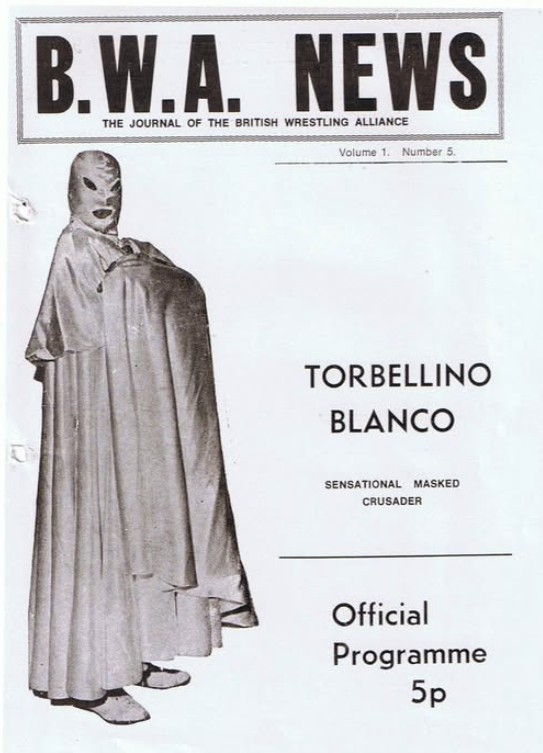
Something new and exciting came from a group of promoters who found a niche and provided it in a professional manner. The British Wrestling Alliance was formed in the early 1970s. Wrestlers were of good quality and presentation was of a high standard. Their niche was to capitalise on an interest in female wrestling. Not all their shows featured women, far from it, but those women that did work for the promotion were of a high standard with a realism that was sometimes missing elsewhere.
Around a dozen promoters were part of the group, but the backbone were Verdun-Leslie Promotions in the south of England and Ace Sports Promotions in the north. The men behind Verdun-Leslie were two young wrestlers, Al Hollamby and his friend, Roger L Sandilands. They made use of their middle names to create the authoritative sounding Verdun-Leslie.
The BWA organised their own championship contests and only those champions were recognised in the halls of their dozen or so members. Championships were contested not just for the men, but for the ladies, tag teams and mixed tag teams which featured on their bills.
It was the ladies of the ring that brought the BWA to national attention. Ron Farrar’s wife, Sue Brittain was the BWA Ladies Champion. Female wrestling had been present in Britain during the 1930s, as documented in our Years of Wrestling series. London County Council had first banned female wrestling in 1938, followed by Middlesex in February of the following year.
The bye law was still in place during the 1970s and restricted the operation of Verdun-Leslie Promotions, who promoted at many London venues. Al Hollamby prompted Sue Brittain to write and request him to include female wrestlers on his London shows. This was at a time when discussion of equal opportunities was rife in Britain. In his reply to Sue Brittain Al stated that he would very much like to employ her and other female wrestlers on his London bills put was prevented from doing so by the London council ruling. Sue used the reply as ammunition and made a complaint to the Equal Opportunities Commission that she was being prevented from work on the grounds of her gender. The Equal Opportunities Commission were sympathetic and asked the Greater London Council to drop the ban.
On 14th February, 1978, the Greater London Council gave their reply. They voted by 36 votes to 29, that the ban should stay in place.
The BWA were not to be defeated. They decided to challenge the London ruling with the support of the Equal Opportunities Commission. The Council’s defence was that the Act did not apply as the bye-law was an Act of Parliament and had been passed before 1964. The case was heard in the summer of 1979 and on 18th June an industrial tribunal ruled in favour of Sue Brittain, and stated she was being prevented from taking up employment because of her sex. The court ruling received national press coverage.
Verdun Leslie were quick to act. On 23rd August, 1979, they staged the first female wrestling match in a public hall in London for more than forty years. Sue Brittain defended her British title against Jane St John, winning by two falls to one in the sixth round.
A point had been made but success was short lived. The Greater London Council won an appeal against the Equal Opportunities ruling and the ban was re-imposed.
BWA Members:
Action Promotions, Manchester
Athena Promotions, York
Atlas Promotions, Coventry
A.D. & R Promotions, Fareham
Dunscot Promotions, Dundee
Inter Continental Promotions, Soberton Heath
Newtown Promotions, Halstead
Terry Promotions, Bexley Heath
Verdun Leslie Promotions, London
Worldwide Promotions, Gillingham
19332
 Wrestling Heritage