
By Ruslan C. Pashayev
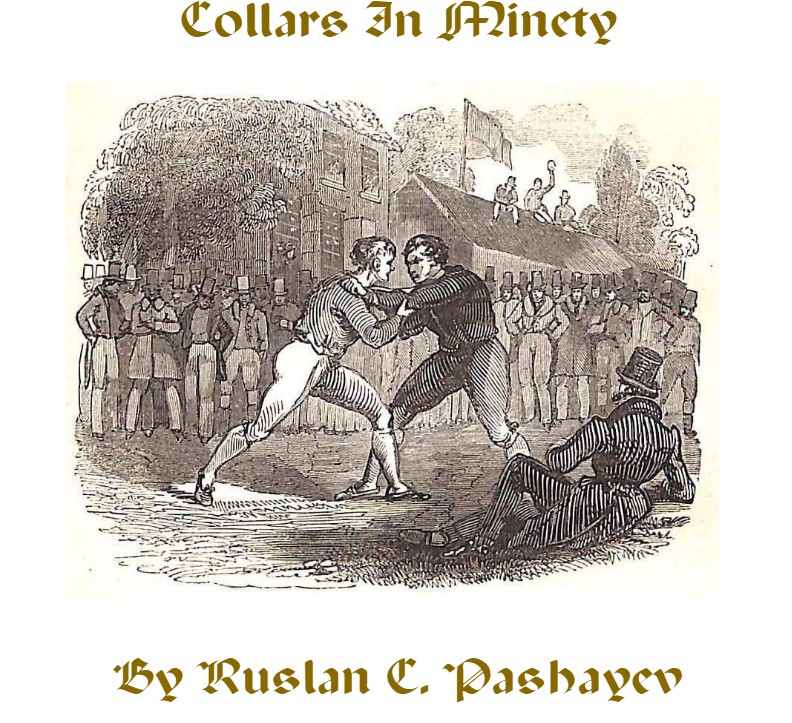
THE “COLLARS” and THE “BELTS”.
It is fair to say that the collar-belt wrestling wasn’t the only form of belt wrestling in England.
The poet of old called Drayton (1563-1631) in his Poly-Olbion speaks of the manly exercise of wrestling in England. In this text two distinctive wrestling styles are specified, a collar wrestling and a belt wrestling but in this case the belt wrestling is a typical waistband style of wrestling.
“This isle in wrestling doth excel; With collars be they yoked, to prove the arm at length. Like bulls set head to head, with meer deliver strength: Or by the girdles grasp’d, they practice with the hip, The forward, backward, falx, the mar, the turn, the trip: When stript into their shirts each other they invade, Within a spacious ring, for the beholders made, According to the law.”
Drayton’s contemporary called John Norden, a topographer who visited Cornwall in the 1580s also writes that Cornish had 2 styles of wrestling a belt-hold style called “by the holdster” and a collar-hold style referred to as “by the coller.
“The Cornish-men they are stronge, hardye and nymble, so are their exercises violent, two especially, Wrastling and Hurling, sharpe and seuere actiuties; and in neither of theis doth any Countrye exceede or equall them. The firste is violent, but the seconde is daungerous: The firste is acted in two sortes, by Holdster (as they called it) and by the Coller; the seconde likewise two ways, as Hurling to goales, and Hurling to the Countrye.”
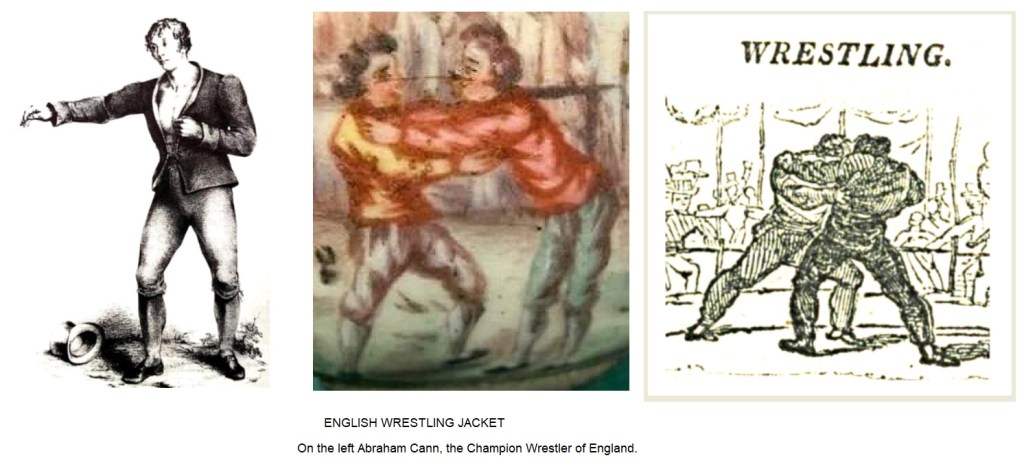
ENGLISH WRESTLING – “COLLAR” WRESTLING!!!
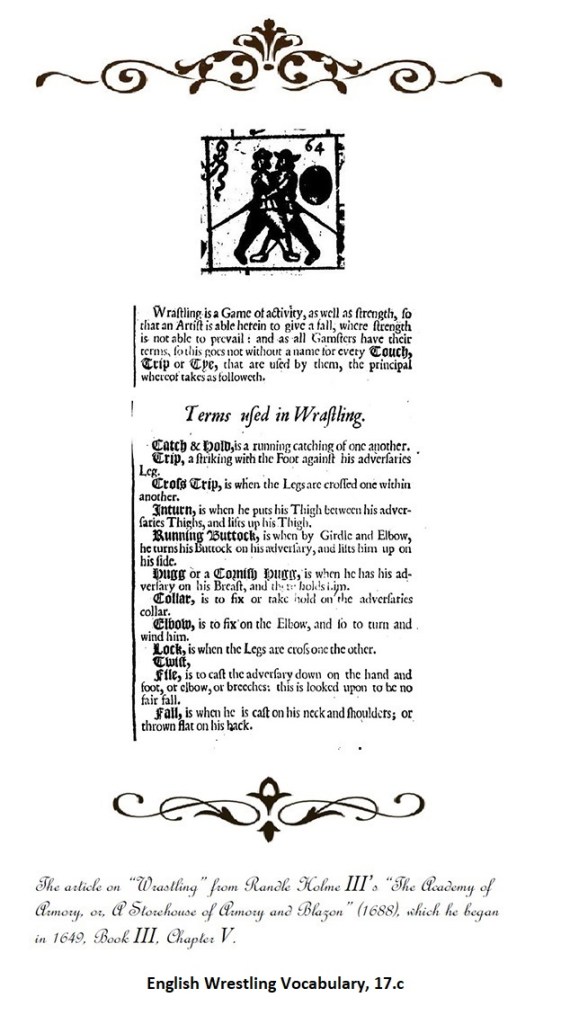
Wrestling collar was a common wrestling tool in medieval England. From the 19c studies we know that: “The wrestling collar was placed round the neck of the wrestler, and held by the adversary. It was tied in a slip knot.” It does look like the collar was actually a tied in a slip knot shawl which was made of a thick fabric. The wrestlers were catching holds by the collar with one hand and with their other hand they very likely were grabbing their opponent by their elbow, wrist, and around the waist. Flat fall on the back in that style of wrestling constituted the victory.
A very similar to the “Hobbinol or Rural Games” collar-belt wrestling style is depicted on the image which I found online in ALAMY collection. It shows two prize-wrestlers wearing “collar-belts” harness. The carving originates from Brittany, France, the land of Breton wrestling. The item description by ALAMY is as follows. “France, Finistere, Guimiliau, Guimiliau Parish close around Saint Miliau church dates from the 16th and 17th centuries, bas relief inside the south porch, two wrestlers.” The historical Breton wrestling and traditional English collar-style wrestling definitely share history and are close relatives.
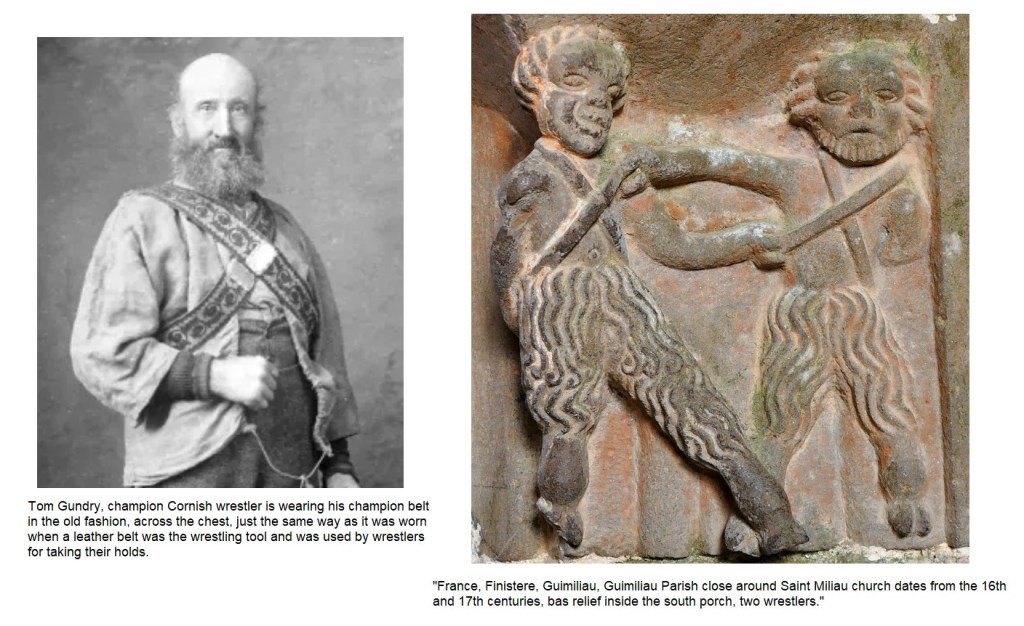
That’s why both had the same wrestling tool a “coler”. It looks like the Breton collar-belt was worn around the neck and across the chest. The “collar-belt” looked like a harness, and all you need to make such harness is to have a belt which is at least 8+ feet long.
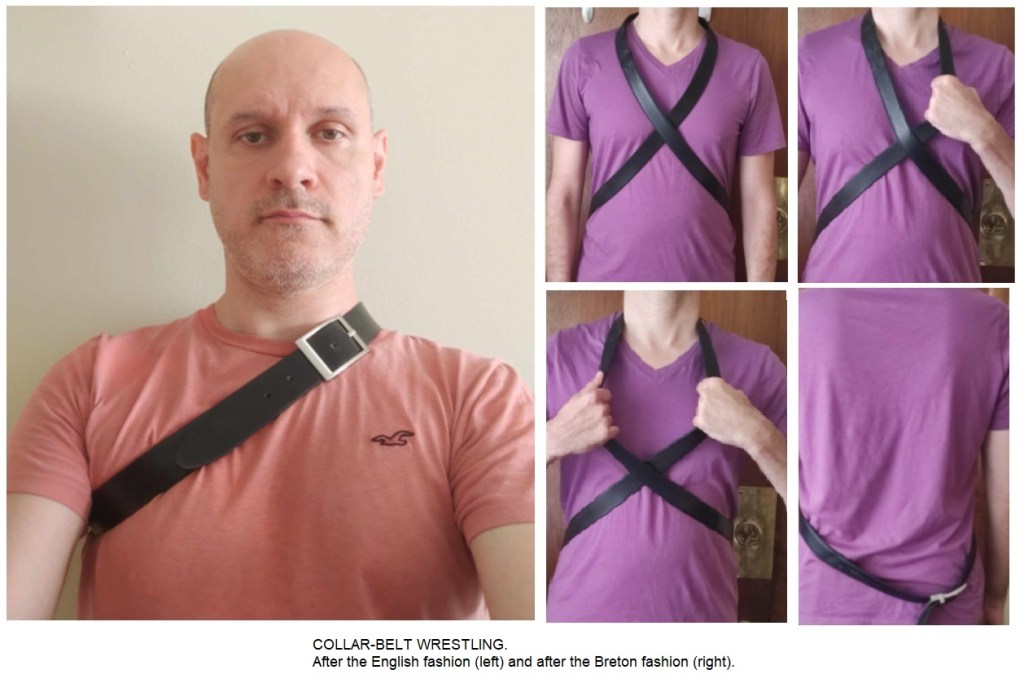
Such “collar” has to be worn somewhat loose, then it is not anyhow different from as if you are wrestling in an actual jacket. No doubts, this type of wrestling harness predated jackets.
On top of everything the wrestling collar was a popular heraldic symbol. As such it appears on the crest of the noble family of Gurney of Norfolk, the ancient Norman family of De Gournay.
This is how I see the evolution of Traditional English Collar-Hold Style of Wrestling.
1. Wrestling in Collars (leather belts), 1400s-1700s;
2. Wrestling in Waistcoats, 1600s-1700s;
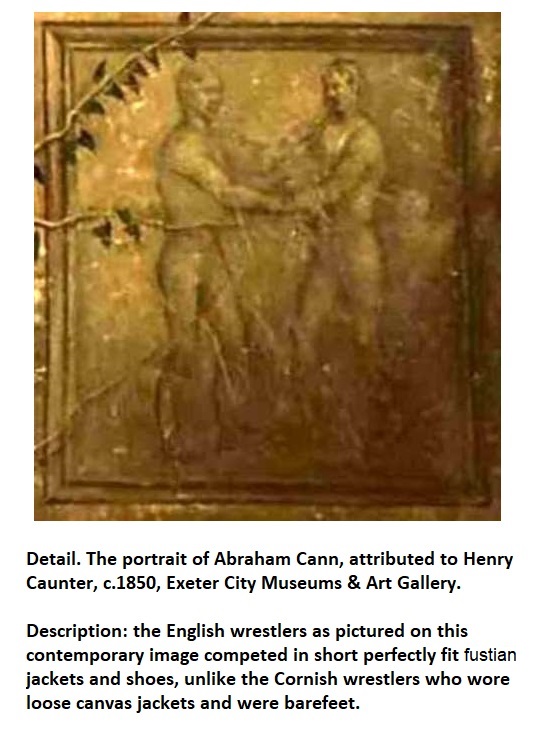
3. Wrestling in perfectly fit short jackets, 1700s-1800s;
4. Wrestling in loose jackets, Cornish fashion, 1800s.
AND THE “COLLARS” AGAIN.
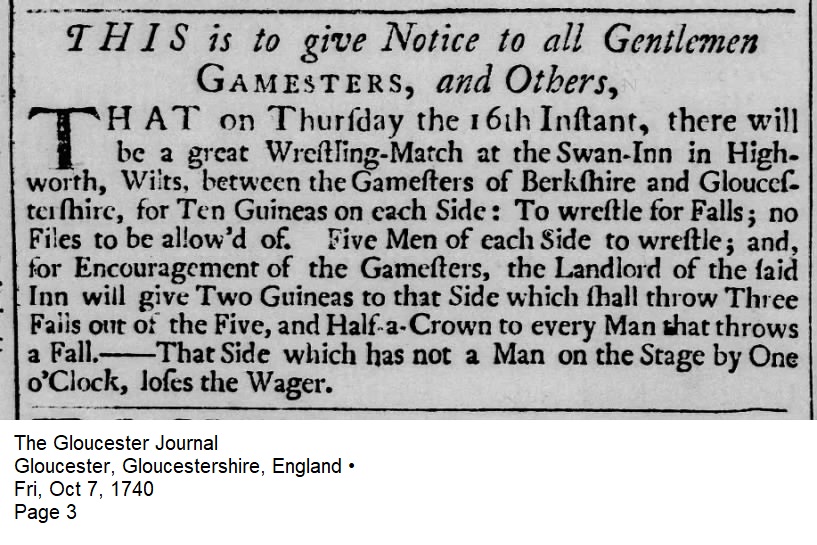
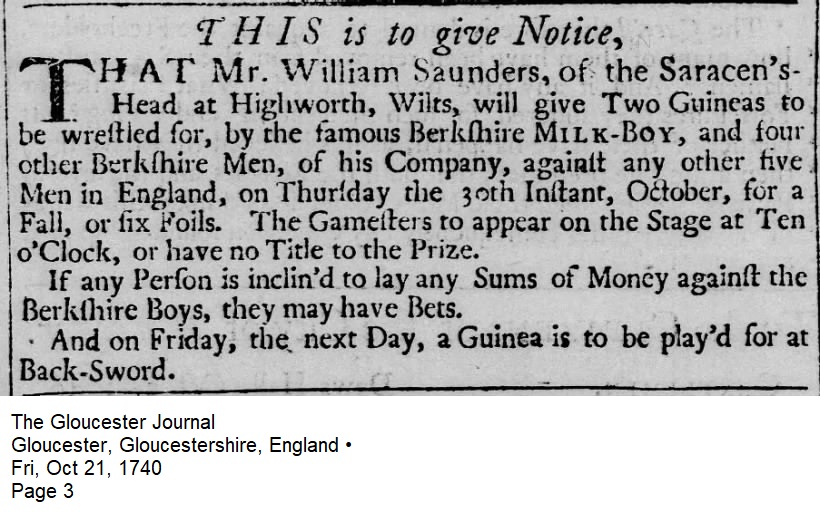
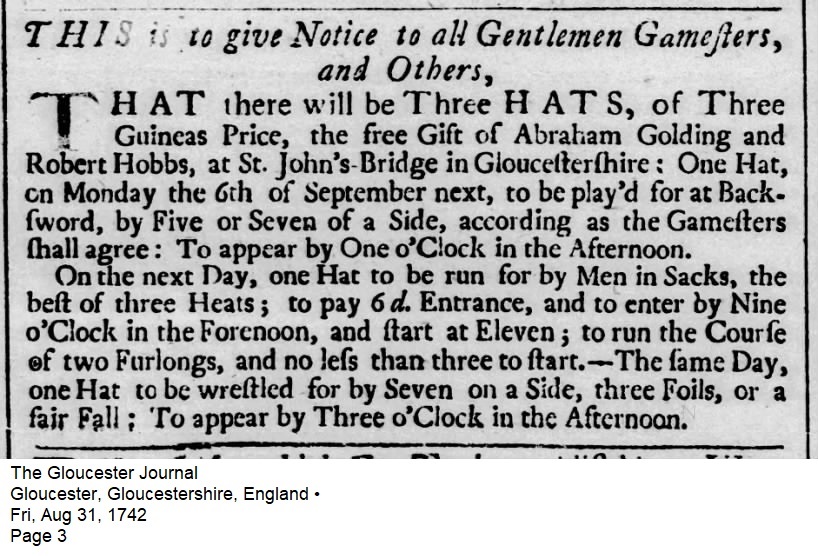
There is no doubts that in the 17c-18c the prize wrestling jackets or to be more specific wrestling waistcoats already existed and were widely used by the wrestlers everywhere in England. In England the wrestlers wore tight perfectly fit jackets, or waistcoats, opposite to the Cornish who competed in loose jackets.
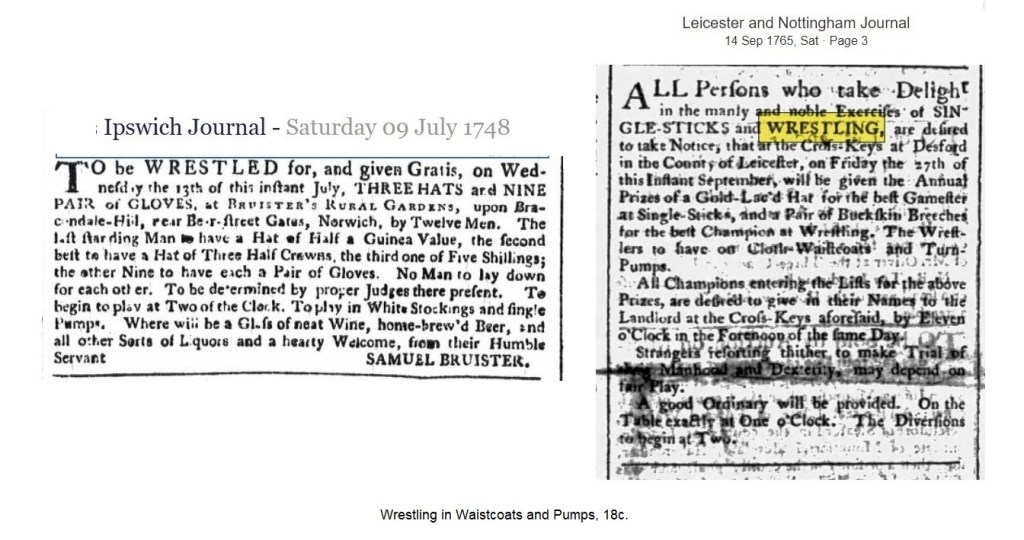
Another main difference between the two sister styles were that English always wrestled in shoes (pumps) and Cornish were barefoot. To the best of my understanding not everyone could afford an actual prize wrestling jacket, a waistcoat. That is to say the competitor at the folk, rural games let’s say such as they had in the Vale of Evesham or in Minety had to put on and wrestle in their own clothes, in the actual, maybe the only jacket or a waistcoat they had (let’s not forget that they were poor those people), which likely was going to be destroyed during the course of match. That is why I think they followed the ancient custom of wearing “collars” (collar-belts). The “collars” were nothing but regular belts. How were they worn is precisely described in the poem. To make such wrestling tool all you need is to tie your belt over the shoulder across the chest and it is good to go.
WRESTLING COLLARS ACROSS THE CHANNEL
In 1872 in a book called “Traités du duel judiciaire” by Olivier De La Marche on Pages 245-246, there is a reference to the professional wrestling competition which was part of the famous Nozeroy Tournament in 1519. According to that reference the gentleman from Brittany (Bretagne) proposed an open to all wrestling tourney for the satin doublet. He provided the wrestling collars (le collet a la lute) for the competition and all matches according to tradition were contested for three victories (the best of five falls). The wrestling collar was a professional wrestling tool made of cloth or cord which was placed around the neck of the wrestler and held by the adversary. It is known from the contemporary sources (the 1509 Petrus Montis’ Exercitiorum Atque Artis Militaris Collectanea) that in France, and in Bretagne in particular, only flat fall on the rear side of the body, the back fall, was considered a fair fall. The aforementioned Breton defeated six opponents but in the last final bout lost to a local called Parigny of Burgundy who won the trophy.
If you are an experimenter soul put the collar-belt on and try to wrestle in it.
And this is going to be your very special Medieval English wrestling experience, my friends.
ENJOY YOUR WRESTLING.
© 2024 Ruslan C Pashayev All Rights Reserved.

18177
 Wrestling Heritage