
Wrestling Heritage welcomes memories, further information and corrections.
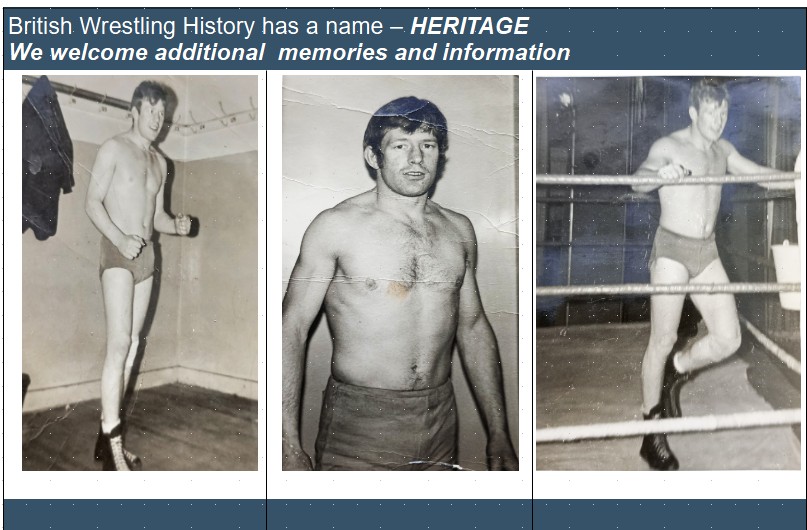
The start of a new decade and the 1960s brought rapid social and cultural change with the Beatles leading a pop music revolution, Yuri Gagarin becoming the first human to enter space, and political leaders on both sides of the Atlantic, John F Kennedy and Harold Wilson, bringing messages of optimism.
The professional wrestling landscape was changing too. The Joint Promotion syndicate was being seriously challenged by a group of independent promoters, led by Paul Lincoln Management in the south, Jack Taylor in the midlands and Cape Promotions in the north. Their shows tended to be more colourful and exciting than the Joint Promotions offering. The heavyweights, who had dominated wrestling for years were now being challenged by the lighter men, a trend that gained momentum following the 1962 McManus v Pallo televised contest. Johnny Saint, Zoltan Boscik, Bob Anthony, Jon Cortez led the lighter brigade for the independent promoters. We will add another name, and that is Dennis Tracey.
We mean no disrespect when we say for some readers that is a name that will have gone under the radar. Believe us, we were admirers of Dennis in the 1960s and he could match those named above with skill and speed, or mix it with more rumbustious opponents like Tiger Woods and Buddy Ward. Had it not been for personal decisions made by Dennis at the end of the decade we are confident he would now be remembered as a lightweight star combatting more famous names Johnny Saint, Jim Breaks, Adrian Street and their ilk.
Dennis Tracey was born in Salford on 3rd December, 1943, with the name Dennis Davies on the birth certificate. His father, and this will likely surprise you, was one of the top welterweights of the time, none other than Danny Flynn. Brought up with wrestling in his blood you might think this would be his sport of choice. Far from it. Dennis’s first love in sport was rugby. It was a love that was to stay with him all his life.
So why did he turn to professional wrestling? Well, to say he was encouraged by dad would be something of an understatement. Dennis’ wife told Wrestling Heritage he didn’t really get a choice of wrestling or not; his father told him he was doing it and that was that! This was the wife Dennis had met on a lads holiday to Butlins. Butlins holiday camps were immensely popular in the 1960s, years before holidays abroad were affordable for most people. So, Butlins it was, and Dennis met the girl from Atherton who he married in 1967 and remained his wife for life.
Naturally Danny gave Dennis his initial training but he felt it necessary that he received additional training from others if he was going to be successful in the wrestling world. Dennis, who was now living in Atherton, enrolled at one of Manchester’s wrestling gymnasiums.
At the time Dennis was training as a painter and decorator, and would go on to become an electro plater. This was fortunate when he began wrestling professionally as his employers were supportive and allowed him time off to travel to more distant venues in Scotland and the south of England.
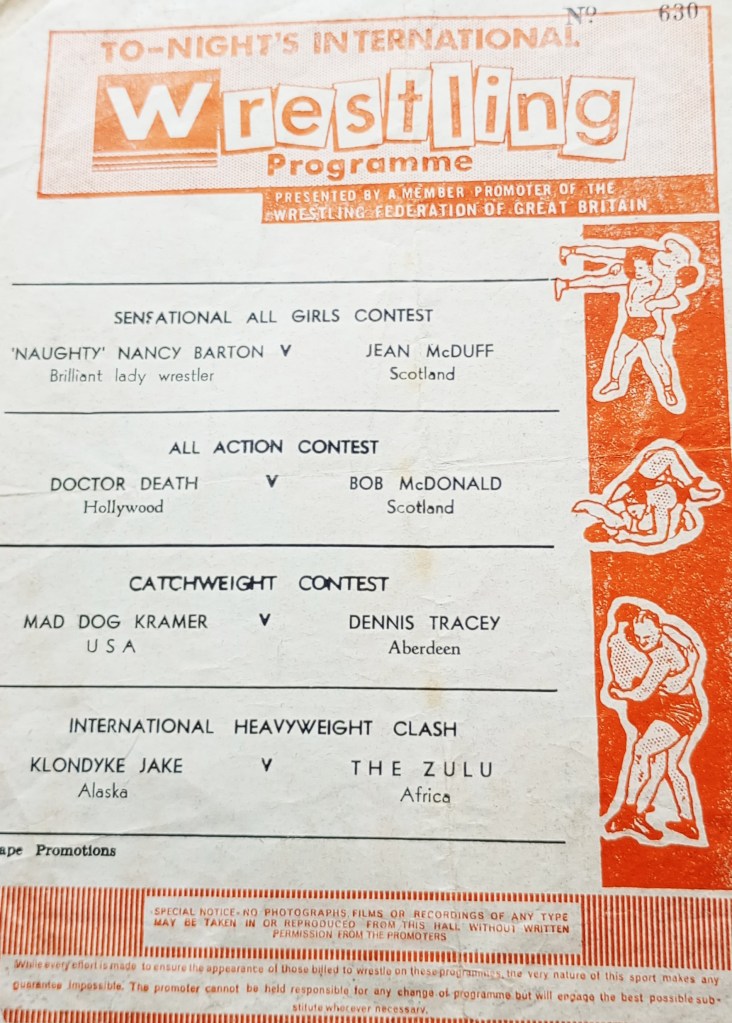
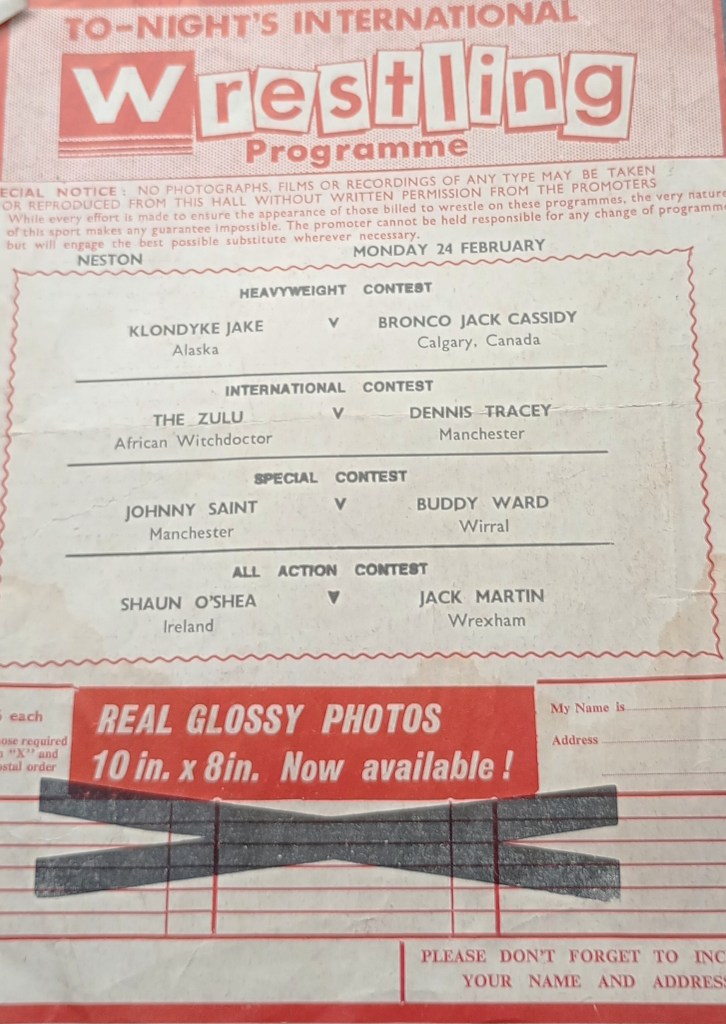
The wrestling career began in 1961. Within the next few months he learned the trade fast with opponents that included some of the best workers on the independent scene at that time. These included veteran London toughie Tiger Woods, Buddy Ward, Mike Mahoney Johnny Saint and The Zulu. We remember watching him in our local halls in technical matches against Ray Charles and more rugged opponents Cornelius Murphy, Mike Mahoney and The Outlaw.
Although son of promoter Danny Flynn our observations at the time were that there were no favours and Dennis worked for a variety of promoters, travelling extensively around the country. In the summer months he would often wrestle on the Dominic Pye afternoon show at Blackpool’s South Pier before nipping to the local airport and fly to the Isle of Man for an evening show. From Devon to the north of Scotland Dennis certainly put in the miles. Overseas too, as he took in trips to Sweden. Dennis’s wife told us he earned good money from wrestling. On average he earned £14 per week from his day job, but he earned £10 a match from wrestling, which they were using to save for a deposit on a house.
Dennis worked exclusively for the independent promoters and so there were no opportunities for television appearances. As we’ve said many times before the best wrestlers were not always the ones on the tele; and Dennis was one of the best. So, the question arises, if Dennis did show such promise why was he not amongst the Mancunians tempted over to Joint Promotions around 1970, Johnny Saint, Al Marquette, Bill Connor, Paul Mitchell?
The answer lies in family circumstances. A son was born in 1969, and Dennis didn’t want to continue travelling with his new family responsibilities. Sadly this coincided with the tragic death of his father in a road accident whilst travelling to a show. For Dennis this was the right time to leave the wrestling behind.
Fortunately he was left with his other interest, rugby league. For many years Dennis played for Langworthy, only giving up the game when he was forty years old. He continued to watch every game and support the team backstage. Following his death the Dennis Davies Memorial Cup was presented to a promising youth player each year.
Death came at far too early an age. Dennis was just 56 years old when he suffered sudden heart failure on 19th June, 2000.
Page added 08/11/2026
29773

