
By Ray Hulm
Wrestling Heritage welcomes memories, further information and corrections.

On the day that I retired from my final job as a lockkeeper I left the following on the wall. …… ” I started work at fifteen years of age. Worked on the river and at sea but I also worked in factories and fields, in the circus and in films. I never achieved much. But I never crossed a picket line. Never judged a fellow worker by their colour or creed Nor sucked up to the bosses for my own ends”….. Pretty much sums it all up.
Dirt Tracks and No Others
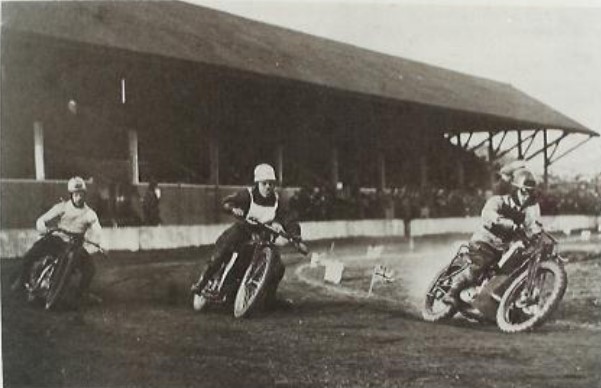
Between 1928 and 1930 two sporting spectaculars, the like of which had never been seen before, arrived in Britain. Neither the dour working class sporting world of mud and fog shrouded football pitches or the Corinthian values of the public schools were any preparation for what was to come.
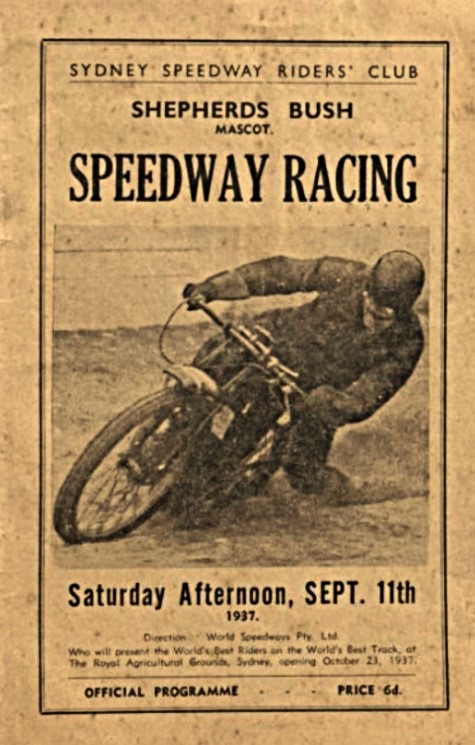
First on the scene was Aussie ex-boxer, circus performer and WW1 flying ace, Digger Pugh who was to be the man to introduce motorcycle speedway to UK. No one had seen anything like it. Teams of riders hurtled around an oval dirt or cinder track at breakneck speeds. “Broadsiding” into the corners one leg trailing along the ground, No Brakes – No Fear was the catchphrase of the speedway rider. Speedway fever gripped the nation, tracks and stadiums opened all across the country and soon every town of any size seemed to have a speedway team.
No sooner had the British sporting public got it’s breath back from the excitement of speedway when another sporting entrepreneur arrived on the scene. Henry Irslinger was no stranger to these shores.
The globetrotting wrestler and promoter was born in Vienna but had first made a name for himself on the London music hall stage during the Edwardian wrestling boom. Later he would decamp to America to ply his trade and also made a name for himself in Australia and South Africa.
By 1930 Islinger was back in London with American wrestler Benny Sherman and together with Sir Atholl Oakley and Bill Garnon would launch the next sporting sensation on an unsuspecting public. During the previous decade America had seen the emergence of an entirely new style of professional wrestling. Gone was the old school Greco-Roman that had become so popular in the past. The new “Slam Bang” style that would come to be known as All-In in Britain was something completely different. There seemed to be few rules with the wrestlers free to hit and kick their opponent at will. It all happened in All-In. Wrestlers hit over the head with buckets and corner stools, unlikely submission holds, blood everywhere, some matches degenerated into full scale riots and certainly no evening was considered to be a real success unless the hapless referee became entangled in the ropes.
The Second World War more or less put paid to speedway and wrestling but both sports would experience a post-war revival. Wrestling was given a brush down and put on it’s best behaviour and would eventually experience it’s biggest ever boom.
By that time Athol Oakley had retired and was running guided tours of the Lorna Doone country of Exmoor and trying to convince holidaymakers that R D Blackmore’s novel was based on fact. Compared to convincing punters of the authenticity of wrestling it must have seemed like money for old rope. In the 1950s Digger Pugh would once more take centre stage with his latest brainwave, stockcar racing. You can’t keep a good man down. Speedway would go on to survive many ups and downs and is still alive and well albeit on nothing like the scale of years gone by.
Speedway and wrestling were the brainchild of sporting showmen and had histories deep in the tradition of the music halls and the wonderful smoke and mirrors world of the circus, wall of death and fairground sideshows. A not quite respectable, not quite the done thing world that introduced a touch of danger and excitement to the hum-drum lives of the many.
Ray Hulm
16129
 Wrestling Heritage