
Johnny War Eagle v Johnny Czeslaw
Wrestling Heritage welcomes memories, further information and corrections.

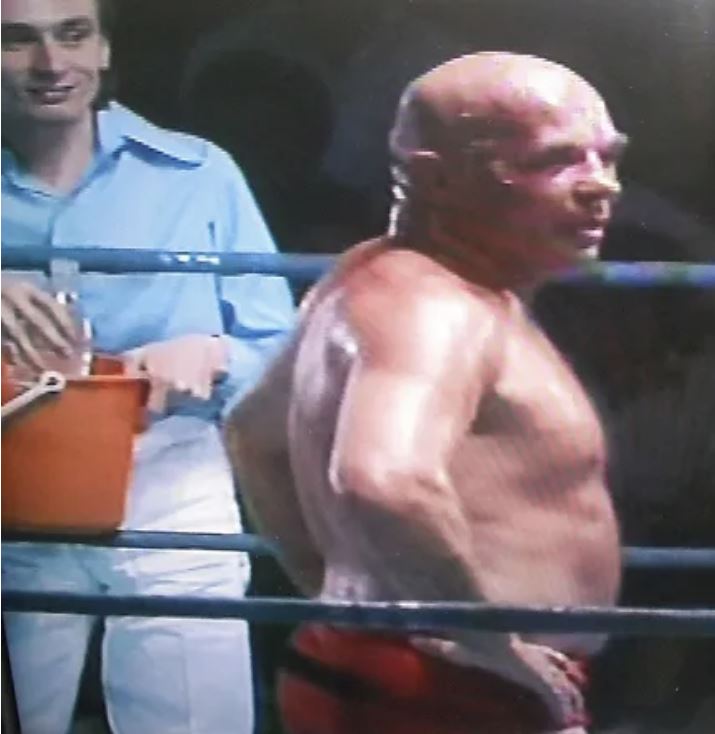
The Polish Eagle was a major and regular name on television wrestling and at halls throughout the south of England. He featured on many of the absolute best Dale Martin spectaculars and was earmarked as the opponent not merely for the very first masked man to wrestle at the Royal Albert Hall, but as the Dale Martin trusty to oppose erstwhile rival promoter there, Doctor Death, in 1966.
The bell was rung for Johnny Czeslaw in August 2014 at the Wrestlers Reunion but the brief ensuing silence will not compare with the silence over the last decades of his ill-health and blindness during which, as it turns out, not a word ever did turn up.
He seemed to live old age outside the nostalgia networks that now surround the sixties wrestling we glorify.
And so it was that the man who put Cracow on the map, before any johnny-come-lately pontiff of the following decade, was greeted warmly by Crawley fans on this curtain-raising heavyweight bout. But the Polish Eagle looked decidedly pensive as his equally aquiline opponent squared up to him centre-ring during the formalities, looking every ounce and more the 15 pounds heavier. Would feathers ruffle, or be ruffled?
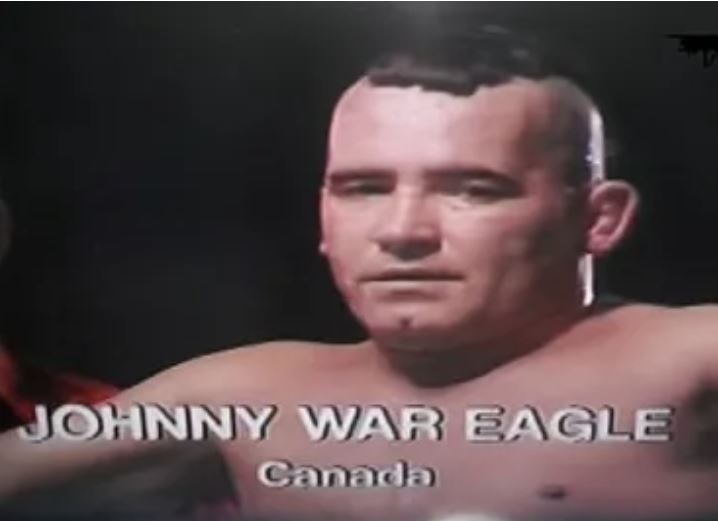
Kent Walton told us early on that referee Max Ward “will be in action pretty soon, if I know Johnny War Eagle.” The Canadian’s hard-man reputation seemed to have reached not only his opponent.
The bout started innocuously enough. Johnny War Eagle seemed bemused by European gentlemanliness as Czeslaw planted him politely atop the corner-post after an aerial lift. The commentator then missed a trick as referee Ward refused Czeslaw’s overtures to approach him and thereby facilitate an illegal spinning escape from a prolonged double wristlock.
Czeslaw exhibited all the skills of a seasoned pro as he delighted the crowd both with his various escape routes from the double wrist-lock and his famed Eastern European accent. War Eagle seemed intent on a quiet back-to -canvas opening round but Czeslaw energetically span out of every hold applied and was justifiably his usual profusely sweaty self by the bell that ended the first round.
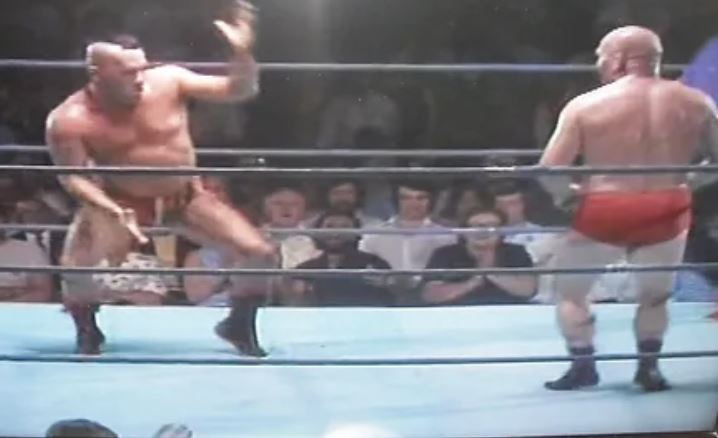
At this point the commentator’s tongue ran loose as he announced: “This is War Eagle’s first appearance in this country at all; we’ve just seen him on television once, a few weeks ago.” Delightful offensive skills from Czeslaw opened Round Two, the Mohawk finally forced to do some work and go with a throw.
The eaglet then warmed up and joined in a lovely threesome effort as Czeslaw trapped the referee in the corner and invited the tomahawk chop. The Pole ducked and the ref missed decapitation by a whisker. A couple more exquisite escapes demonstrated why Czeslaw polished his bald pate to allow him to slip out of otherwise secure headlocks and leg scissors.
Things turned briefly nasty in the third, Czeslaw coming off decidedly second best in an exchange of chest cops. Two ladies at ringside chuckled as Czeslaw belatedly turned somersaults from the injun’s chops, possibly the sole criticism we could make of the Pole’s work. Suddenly, with the seconds already on the ring apron, and without any apparent provocation, Czeslaw broke into a fit of rule-breaking.
Having appropriately upped the tempo, The Polish Eagle moved in for the kill in the fourth, delivering a couple of ring-wrenching postings. But it was all a mere prelude to War Eagle’s war dance and inevitable tomahawk chop. Czeslaw wasn’t happy with his own selling of the move and came up to invite a more believable slam and press instead of the probably planned knockout defeat.
War Eagle belied the bad-tempered villain’s persona that Kent Walton had obviously heard about. Contrarily he seemingly forgave all, offered hand-shakes and forgiveness all round which the elder Eagle accepted.
The French Canadian’s real name was Fernand Messier and he had tagged in various countries, but never Britain, alongside the not at all dissimilar Billy Two Rivers. Whereas Two Rivers was famously domiciled in Barnsley, Messier took the ring name of an English actor who had assumed the role of Sitting Bull and other redskins in many of the cowboy films that boomed in the forties and fifties.
This, quite strangely, would be his final UK televised appearance – even though he wrestled on in Britain for the rest of 1975, culminating with a Royal Albert Hall knockout of all Red Indians’ favourite victim, Johnny Yearsley. We can do our twenty-first century Sherlock Holmes best and deduce that it was his conflictingly controversial tactics at our local venues that prevented his further small-screen exposure. He seemed against Czeslaw to struggle unsmilingly to play the hero and perhaps ITV bosses didn’t want to televise the notion of a wrong-doing chief.
And so we saw most of a set-piece Johnny Czeslaw bout here, as he led the way under British rules and carved out an exciting and balanced bout: only his trademark hook under the bottom rope was missing.
For those many of us who had seen him wrestle many many times at our local halls, this bout and review serve as a fitting and nostalgic reminder of one man’s twenty-something year contribution to making British wrestling great.
 Wrestling Heritage