
By Ruslan Pashayev

The First Nobleman of English Pro Wrestling
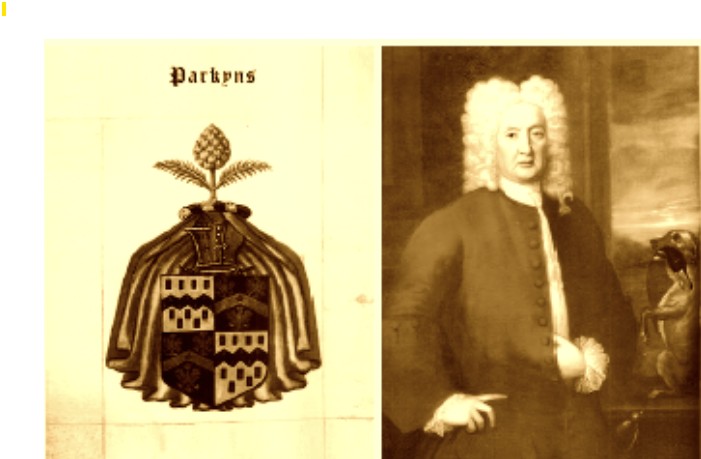
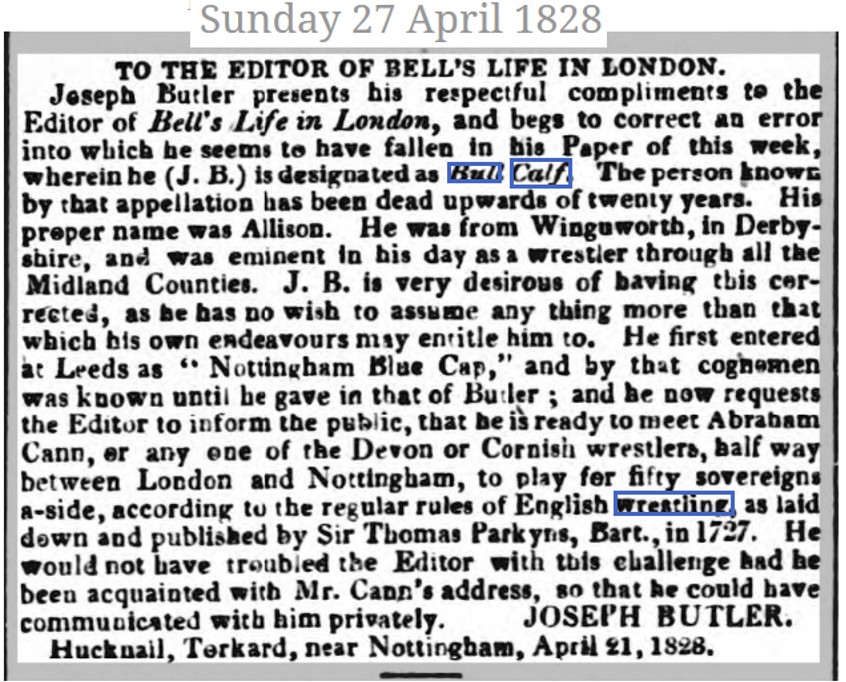
Nottinghamshire’s second baronet of Bunny Park Sir Thomas Parkyns (1664-1741) became famous all around England as an author of the first professionally written wrestling manuals. These include, “Inn Play or Cornish Hugg Wrestler” as well as a set of “General Rules of English Wrestling,” the fullest edition of which was published in 1727.
In his wrestling manuals, Parkyns highly spoke of the Close Wrestle (referred to as the In-Play of Bedfordshire, or Hugging) in comparison to the Arm’s Length Wrestle (referred to as Out-Play of Norfolk, or Tripping). Those two types of wrestling were the most common English traditional wrestling styles variations of which were widely practiced all around the country.
Both these wrestling fashions were successfully incorporated into the Catch-hold wrestling. Catch-hold was considered a loose wrestling style, or free style, in his manuals Parkyns says that he “taketh what he pleaseth of him”, (of his opponent). Obviously, he speaks only about holds above the waist, because according to a long established tradition no holds below the waist were legit in English wrestling. In Catch-hold style an initial hold doesn’t exist, neither does any applied hold needed to be maintained during the match, as opposed to what is a norm in the fixed-hold styles. For example, let’s say in fixed-hold wrestling styles which were popular in Magna Britannia around the same time, such styles as Back-hold and Collar-and-elbow, after the hold was taken it wasn’t allowed to break that hold until one of the two wrestlers was felled by the other.
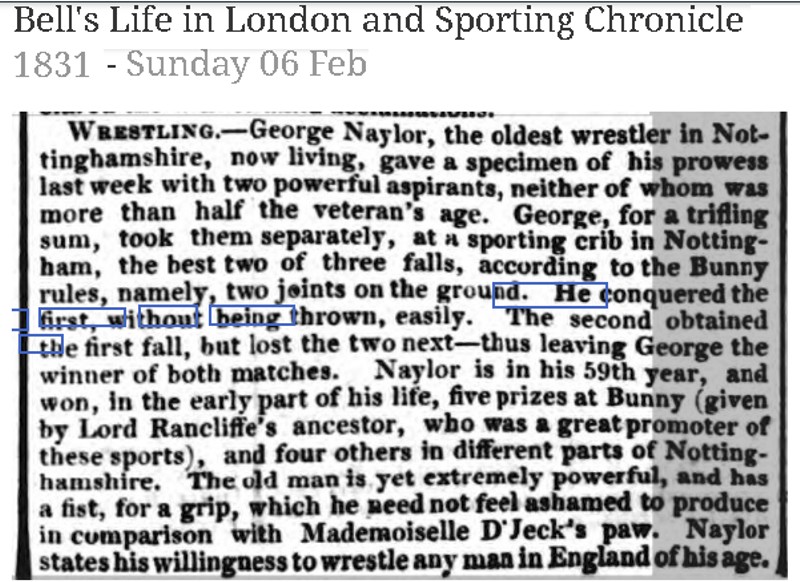
In Parkyns’ system the fair fall was counted when any “two joynts” (such joints of the person’s body as shoulders, elbows, wrists, hips, knees, and ankles,) simultaneously hit the ground, and 3 foils (if either of two wrestlers fell upon any part of the body) were a substitute for one fair fall. All matches were 3 out of 5 fair falls. The wrestler would wear a waistcoat (jacket) and shirt. In Cornish and Devon styles only the holds of jackets were considered fair, Parkyns instead, in his Catch-hold allowed all kinds of holds above the waist, so to say not only those of the person’s clothes. (For a more detailed explanation read the Appendix: Two Joints)
Parkyns also established an annual professional championship Catch-hold wrestling tournament at Bunny, Nottinghamshire. That happened first time in English history. The Bunny Championship Wrestling existed for many years after Parkyns’ death. That pro wrestling title was dominated by the athletes from Nottinghamshire and Leicestershire. Also it was Parkyns who basically established a new profession that of pro wrestler. At his place, he had several men whom he employed for the purpose of entertaining his friends and himself with wrestling exhibitions (matches).

A 1745 news report speaks of the “greatest wrestling match that was ever seen in England” (tourney) between the men from Nottinghamshire, Rutlandshire, Buckinghamshire, Hertfordshire, Derbyshire, and Middlesex for the large Silver Tankard. Notably, the wrestling championship’s program doesn’t mention if the West Country’s or North Counties’ champions participated in it. This makes sense, since in the first half of XVIII century, the epicenter of organized English Catch-hold pro wrestling (after the Parkyns fashion) was located in Nottinghamshire and Derbyshire.
Notably, one of the most famous matches of XVIII century made “by the wrestling rules of Bunny” (Catch-as-catch-can above the waist) was between Parkyns’ favorite pro wrestler Richard Allin of of Hucknall, Notts (aka “Wrestling Dick Allen”) and Richard Trubshaw of Colwich, Staffordshire (1689-1745). The match took place at Repton, Derbyshire and was won by Trubshaw. Back then, pro wrestling exhibitions (matches) were usually performed on a 15 yard wooden stage which was erected near a wooden stand with seats, with the maximum capacity of up to 5,000 spectators.
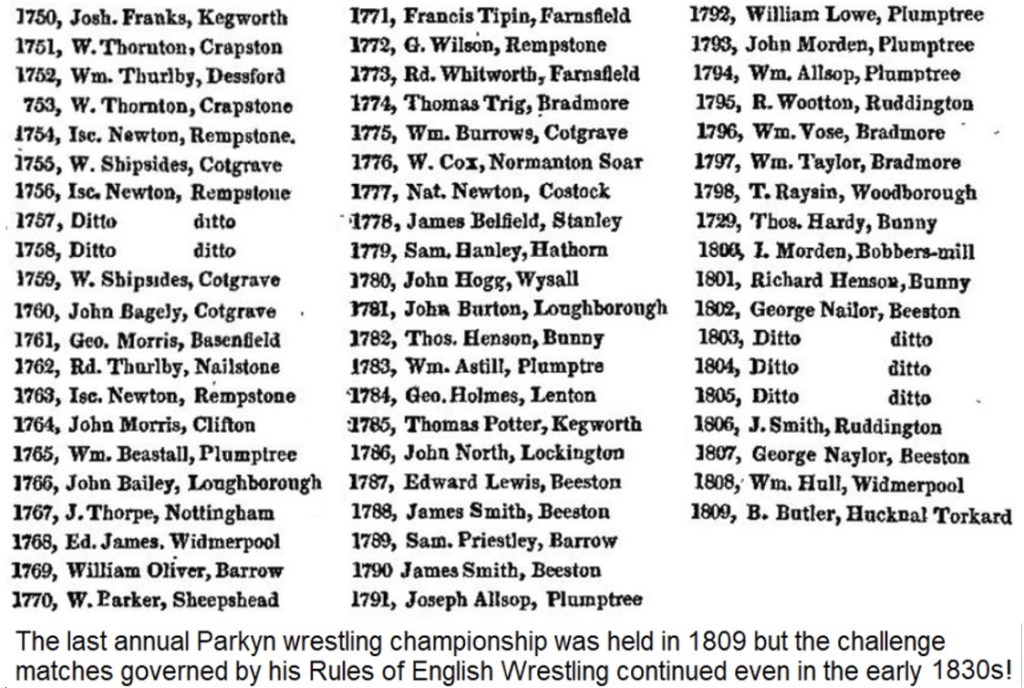
The full list of the Bunny Ring pro wrestling champions appears on Pages 205-206 of the book called “Walks Round Nottingham” (published in 1835) by a sailor and journalist by trade named “Captain” Matthew Henry Barker (1790-1846) who wrote it under an assumed name of “A Wanderer.” The mentioned above list of champions as well as some 1700s-1800s newspaper references to the Bunny Pro Wrestling Ring will follow this article. Notably, neither Cornish nor Devon sportsmen ever competed in Parkyns’ Catch-hold championships. And this makes perfect sense too. In both of the above styles athletes were trained to take holds of jackets only and hence they wouldn’t want to compete on some other unfamiliar to them conditions. In Parkyn’s times the Cumberland/Westmorland variation of an old English Back Hold (or the Hugg) wrestle wasn’t heard of outside of its native area.
Interestingly, in the early 1850s when Cumbrian and Cornish champions decided to settle the dispute about the Championship of England it was suggested that they wrestle one fall in their own style and the third decisive fall in the catch-as-catch-can style above the waist, which basically was an old Parkyns Catch-hold. That match never happened. Which is understandable, the “regional” champions (of their styles) didn’t want to lose their championship status, their fans, and their business, if you want, and hence such thing as Champion Wrestler of England didn’t even exist around that time.
Actually, this championship muddle situation was quite similar to how in the 60s the independent, regional pro wrestling promotions all successfully co-existed and there was no demand in unification matches of any kind and the fans were happy with the existing status of things even if it was nothing but a chaos and disorder. “Everyone gets a medal”, as they say, and you can claim a “world champion wrestler” title in your very neighbourhood because you won that honourable title in the OPEN TO ALL tourney and it’s not your problem that only a couple of blocks, your pals participated in it. “There is nothing new under the sun”, right?
19080
 Wrestling Heritage