

Part 4:
The 19th Century – Organisation and Records
“There were also wrestling matches, and Dockham (Adam Ridings) and many other powerful men took part in them. The object of the wrestler was to place his antagonist on his back, and in this style of contest no throw was counted unless both shoulders of the fallen man fairly touched the ground. Any kind of rough usage was permissible. The wrestlers were of sturdy build, below rather than above the middle height, with powerful limbs, massive neck, and bullet-headed.”
Rochdale and the Vale of Whitworth. By Wm Robertson
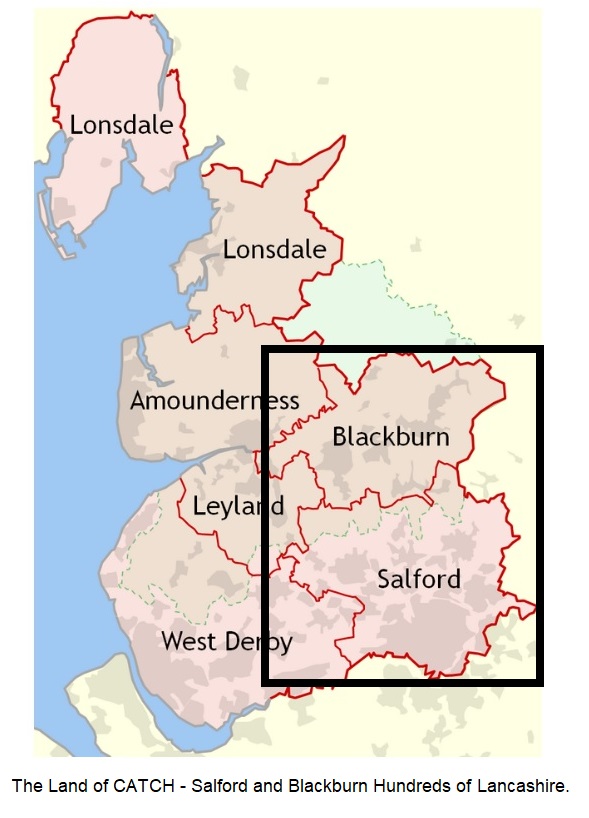
There are no credible evidences or records of an organized prize-wrestling in South and East Lancashire before the year of 1828. I have a large collection of old broadsheets from South Lancashire in my possession which features all kinds of traditional English sports that were played during the local Wakes, Rushbearings, Fairs, and etc. festivals and there’s not even a single mention of wrestling contest in them. Similar ads from the other so-called “wrestling regions” of England always mention the game of wrestling. This fact makes me think that in the eastern parts of Lancashire (historical Salford and Blackburn Hundreds of Lancashire) running open to all wrestling competitions or even a single combat challenge matches wasn’t common. Instead, there is a rich and very old culture which surrounds the local variation of prize-fighting, aka the Lancashire up and down fight. Such fights were mentioned literally everywhere, any big sporting gathering had them. Wrestling content, and I mean the actual wrestling vocabulary, the wrestling holds, which formed an essential part of Lancashire up and down fighting was not the same as it was in the
Game of Wrestling which was popular all around the country and wouldn’t qualify as such based on a traditional English vision and understanding of what the wrestling game is about.
During my Lancashire studies when I like Columbus (lol) tenaciously and desperately was searching for the “new territories” the places in eastern parts of Lancashire where at some point the sport of up and down fighting flourished, I was lucky to discover the township of Over Darwen in Blackburn Hundred of Lancashire. This locality produced arguably the toughest “feyters-n-rosslers” of this part of Lancashire County. Thus the Land of Over Darwen Champions was added to the very beloved child of mine The Map of Lancashire Wrestling and Fighting Traditions.
The story of Over Darwen men visiting different towns where they had Wakes and Fairs which among other folk sports always featured up and down fights, and challenging local champions, participating in the fights which made them legends of their own vicinity originates from History and Traditions of Darwen And Its People, by J. G. Shaw (1889).
“Amongst this population the dialect is preserved it its most racy forms, and stories of the past linger long, how famous wrestlers went forth to challenge the champions of other townships; how football matches had been played for generations with the men of Offiside and Tottington, said matches nearly always ending in fights which called out the manhood of half-a-dozen valleys; and how young men had gone forth and won glory on nobler fields, marching beneath the banners of England thro’ the long Peninsular War, assisting to overthrow the Great Emperor at Waterloo, and following him to his grave beneath the willows of St. Helena.”
There obviously was a local hero, named James Marsden aka “Owd Jem o’ Isaac’s”, the master of thousand and one wrestling holds of whom we learn from the paragraphs below.
“In those days fighting didn’t mean boxing or fencing and striking only above the belt, but dashing in anyhow with fists and feet alike. Owd Jem was ready with both, and he didn’t care which. Neither did he care whether he fell under or over his adversaries; he could always “lick ’em.” If he were on the top he gave them a good pummelling, and if he were underneath he had a trick of gripping them in his arms like a Russian bear and squeezing the breath out of them, while, at the same time, he brought down his heels upon their legs like sledge hammers. They used to say that to get in Owd Jem’s embrace was like getting into an hydraulic press. I remember he once went to Haslingden Fair, and Haslington Fair 70 or 80 years back was as noted for fighting as Turton Fair used to be not long ago. The rough characters for miles round used to go to Haslingden Fair for a spree and a fight, and, of course, Owd Jem went too”.
On this particular occasion there was a man there who had come for a fight, and he kept getting on the top of the horse block, or “riding stone,” as we called it, at the Roebuck Inn, Dearden Gate, just going into Haslingden from this end. From the top of this stone he kept swaggering that he would fight any man in Haslingden. A great crowd gathered round him, but nobody durst take up his challenge until Owd Jem came up. Jem sneeringly said-” Whod ar’ ta mekkin thi noise abeawt? Con la feight onny ?” “Why, con yo’ ?” replied the other in a somewhat milder tone. “Come off thooase steps, and aw’ll let thi’ see,” says Jem. The man came down and squared up for a fight, but before he could make any use of his fists Owd Jem flew at him and threw him down, and as the bully turned tail he punched him all the way down the street. The crowd followed, and ginger bread stalls and toy stalls were scattered in all directions. When Jem had finished with him, and the defeated bully had fairly run away, the crowd made a collection to reward the “Darruner” for licking the fellow who had terrorised over them so much. I should say it is quite 85 years since that happened.”
Among the most famous 18c Over Darwen “feyters” was a colorful individual by the name of Burgoin Fish, the future Methodist preacher, about that we also learn from the same book. Interestingly they mention him competing at the Turton Fair, which along with the Holcombe Wakes was notorious for its deadliest most atrocious up and down fights. It relates that Burgoin was born at Darwen Chapels, in May, 1766, and that he grew up a strong athletic young fellow and a notorious prize-fighter. At the age of 22 he was going to fight the champion of Turton, at Turton Fair.
- WHERE? – IN ASHTON-UNDER-LYNE!
The earliest (known to me) great (or noted) wrestler, actual pro wrestler, from South Lancashire was called Sam Ashton (born circa 1800), who was a resident of Dukinfield and Ashton-under-Lyne areas. He was famous all around Ashton for his crotch-hold body-slams treatments which he delivered to everyone on their very demand!
Another famous champion of the same generation was a Boltonian man called Bob Bootal, a very desperate character, who boasted that he floored every constable in his native town and it is because of that he ultimately was the best wrestler!
The earliest recorded official pro-wrestling match in this area happened in Ashton-under-Lyne, in October 1828, and was a challenge match between the two “wrestling celebrities” from the South Lancashire mill-towns of Bolton and Bury. This sporting event was “among the amusements” played during the Ashton Wakes week.
- WHY? TO SAVE THE BUSINESS AND MAKE MONEY SAFELY!
The year 1828 was a very important year for English prize wrestling. On Easter holiday the gentry of the City of Leeds, in the neighboring with Lancs, the West Riding of Yorkshire, held an open to all wrestling championship tourney. It was a tourney in traditional English jacket-style of wrestling, in which only holds of the jackets being allowed, often this style was referred to as a “one hand to collar” wrestling. The rules stated: “is to take hold of the other by the collar, after which they may shift their hold to any other part of the jacket they please”.
Unfortunately the Cornish sportsmen ignored this tourney, I am surprised they decided not to participate in this big wrestling gathering but very likely they were against the “each man to wear a fair shoe and padding, if he chooses” thing. That condition was the main difference between Cornish and English jacket-wrestling styles. The Englishmen from various regions of the country did show up and participated. The competition was obviously dominated by the Devonian athletes, the best collar style wrestlers of England, and their hero A. Cann was an easy winner of the championship honors.
Notably, no local West Yorkshire wrestlers participated in that tourney, neither the wrestlers from neighboring South and East Lancs areas did. This fact tells us that a jacket-style wrestling was either not known to them or simply not practiced. One of the articles of the rules which governed the Leeds championship tourney stated – no holds below the waist allowed. My guess is that this paragraph was added to the rules because in West Yorks and South and East Lancs the wrestling holds below the waist were accepted as a fair wrestling technique. For the wrestlers from all other regions this was a no go, so there was no reasons to even mention it. So to say that addition to the rules was made specifically for the local men, to make sure that Yorks and Lancs wrestlers, if they decided to participate, will not turn normal English collar-wrestling into something else.
Even in the 1880s, when the jacket-style wrestling lost its popularity, during the heyday of the English Catch-hold wrestling, the holds below the waist were still considered an unfair action.
- CONCEPTUAL APPROACH. WHAT IS ENGLISH WRESTLING?
“CONCLUDING REMARKS. To be a good wrestler, quickness of eye, agility of movement, strength of arm and leg, and equability of temper are indispensable. A good even green turf is requisite for a very hard soil presents too much resistance to the foot, while a soft one causes the players to slip and stumble. The dress should be light and easy; a pair of woollen or linen trousers, confined at the waist by a belt, an elastic shirt, and thin shoes and stockings, being all that are necessary. Professional wrestlers, indeed, dispense with all but the trousers; but when you wrestle for mere amusement, your ordinary cricketing costume, minus the spiked shoes, will serve admirably. It is expressly forbidden by the etiquette of the sport for either player to seize his opponent by the throat or below the belt, to use the fist, or in any other way to take undue or unfair advantage.” (The Boys Own Book, A Complete Encyclopedia of Sports, by Wm Clarke 1885).
The brilliant, most precise and historically accurate explanation of what English wrestling actually is comes from the amateur champion wrestler of England (in catch-hold style of wrestling), the famous nineteenth century wrestling scholar and educator, and the honorary secretary to the Cumberland and Westmorland Wrestling Society in London, Walter Armstrong himself, who was known all around the country under the nickname of Cross-Buttocker.
“A system that does not teach a man to keep on his legs and retain his perpendicular is of very little service either as an athletic exercise or a means of self-defense. In a hand-to-hand encounter, tripping is the very essence of the art of wrestling; consequently, if that is prohibited, the stronger and heavier man must always have an extra commanding advantage over a lesser opponent, which in English wrestling he does not always possess, as the superior agility of a light-weight exponent of the exercise often makes up for what he is wanting in avoirdupois. As the French style of wrestling, or any other form of ground wrestling, can never become popular, this division of our subject may be summarily dismissed.”
“Q. Should ground wrestling be abolished? A. Ground wrestling, in the opinion of most people qualified to discuss the subject, ought never to have been introduced into this country, as it is decidedly un-English, and calculated to bring an ancient pastime into disrepute. There can be no objection to the catch-hold system, “first down to lose” the fall, to catch hold above the waist without being restricted to any particular grip. In a “first down to lose” contest, the referee has not the same difficulty in giving a decision which he must experience in all “three-point” matches. Unquestionably, if an amalgamated style of wrestling were introduced throughout the country, the ancient science of wrestling would assume its proper position among the numerous athletic exercises for which this land of vigorous and manly outdoor sports is so justly famous.”
The ads of the Leeds Easter Tourney, as well as some details about the championship, like mentioning the participants and the matches’ results, appeared in Manchester press and that for sure grew interest of the local sports promoters, the publicans, to the game of wrestling which was neglected in South Lancashire areas for so long. A reason of this interest had also something to do with the strict prosecution of their favorite sport, the Lancashire up and down fighting, by the late 1820s it became illegal, and the organizers as well as the participants of those wild exhibitions were haunted by the local police. This business was unsafe. And yes of course the fighters themselves got maimed or permanently injured very often in this type of fighting. The publicans were about to lose a whole fighting industry, their main business, and many good “feyters” became soon “unemployed”.
This particular situation caused a certain interest, which made the sport-promoters of the South Lancashire to consider running Lancashire prize-wrestling matches, instead of the Lancashire fighting contests, something that was never done locally before. But their choice could not have been the sophisticated Cornish jacket-style, because its extensive wrestling vocabulary was unfamiliar in this region of England, and if introduced, it would have been perceived as nothing but an old brutal English tugging and clog-kicking game which was well known and widely practiced in Lancs, just like it was everywhere else in England. Yes, it was their local wrestling style too, “giving a Lanky” simply meant kicking a person to the ground. And the “bosses” obviously didn’t want that to happen. They wanted something else, a new legit official sport of their own, hence they called it “Lancashire”, the sport which according to their plan had to be recognized and accepted by the contemporary English society. And of course the chosen sport should have been a safe sport, safe for everyone, for the players as well as for the business owners, which the first decades of catch proved it was, there were no recorded deaths in this style of prize-wrestling since its introduction.
The newborn game was designed to save the business and to become the safest way to make money, in compare to what the illegal up and down fighting was, to employ all the local gamesters, and quickly capitalize on it! The re-branding (wrestling instead of fighting) was an ultimate solution of local promoters! The publicans of Ashton were the true fathers of Lancashire catch wrestling, the originators of the game that was destined to change pro wrestling history once and forever.
18046

Made with WordPress
 Wrestling Heritage