

Part 7:
Aftermath

Lancashire wrestling found its second home across the pond in the second half of the nineteenth century. Quite a few top notch English pro wrestlers left to Old Country seeking for an international glory in America and that is how professional catch as catch can wrestling was first exposed to the local American fans, who quickly fell in love with this new kind of wrestling entertainment.
It was new to them simply because it didn’t look anything like the pro wrestling they had before which was all standing only styles such as Collar and Elbow, Side Hold and etc. styles which also were of the ancient Mighty Albion’s origins.
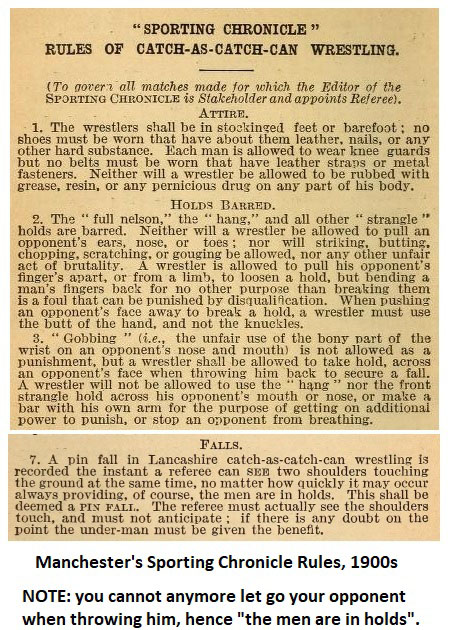
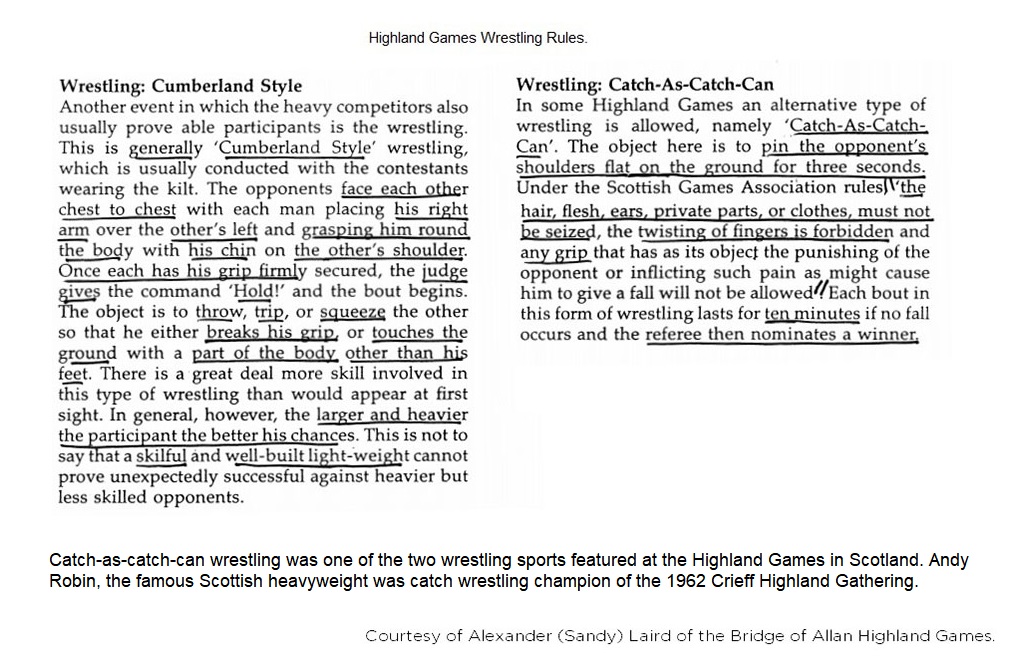
In the course of the 1890s American wrestling promoters started changing the original rules of Lancashire wrestling. That is how a three second pinfall was first introduced and all other kinds of fair back falls were abolished. Yes, the fair back falls, this is how you win all your matches in catch as catch can wrestling. In the early 1900s three second pinfalls became the only kind of back falls that were accepted across the country. So to say the old Lancashire’s flying and rolling falls were no longer in use in American pro wrestling communities, and only American amateurs continued competing according to the rules which were in full conformity with the old school Lancastrian fashions.
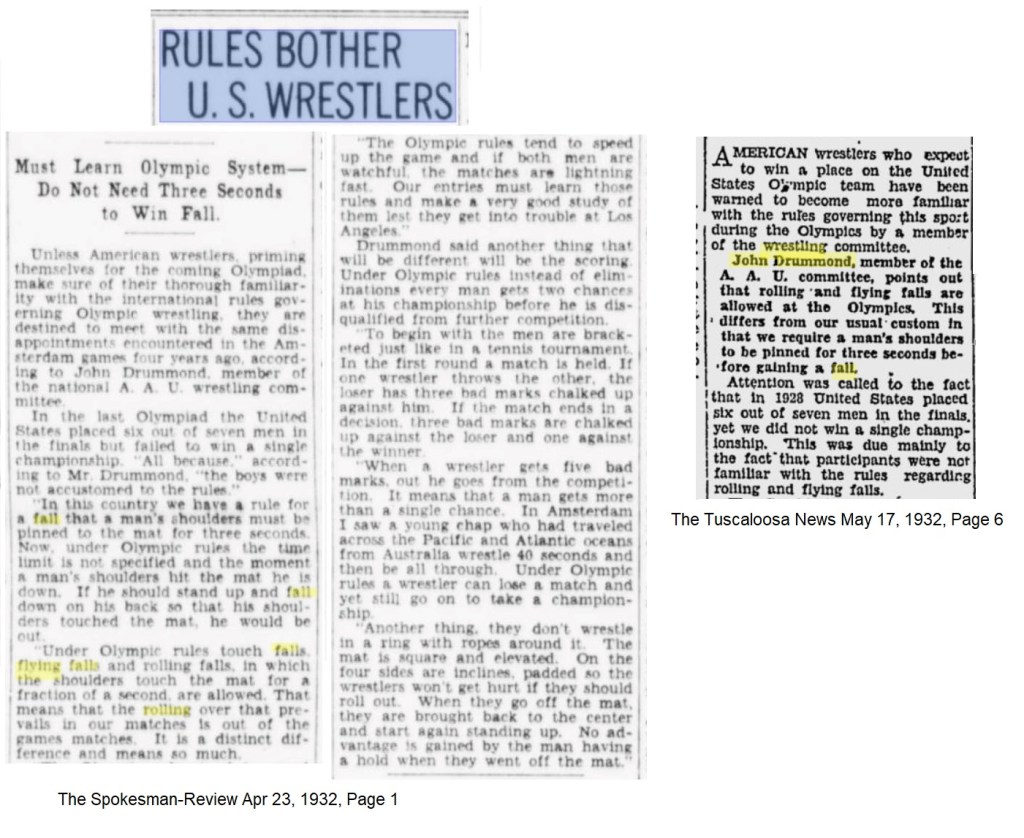
But even this didn’t last very long, after the WW1 all wrestling matches in the US, regardless whether they were amateur or professional recognized only one kind of back falls that is a three second fall. Meanwhile the rest of the world was still using the original rules of Lancashire wrestling in all catch as catch can contests. The historical rules according to which all kinds of back falls counted, flying, rolling and pins, if two shoulders hit the ground together it is a fair back fall, regardless how fast that happened, the ref saw it and that is fair enough.
These rules were standard Olympic rules of catch as catch can wrestling even in 1932.
After the end of WW1 the pro wrestling in Lancashire and Britain slowly died out. This happened first of all because catch as catch can wrestling was internationally exposed as a predetermined finish affair, a wrestling show rather than an actual competition, a sport. Instead, a new pro wrestling style, called All-in Wrestling, an import which came from America successfully substituted for it. All-in was a mix of the three different wrestling cultures, those of British (catch wrestling), Continental (Greco-Roman wrestling) and Japanese (judo and jiu-jitsu self defense martial arts, and hence the “victories” in those “contests” (meant to say exhibitions) were achieved like in wrestling on the back falls, as well as on submissions and knock-outs as usually happens in martial arts. Not only the “rules” were different but also the overall look of the wrestling shows, and that is why these two kinds of pro wrestling should not be confused with each other.
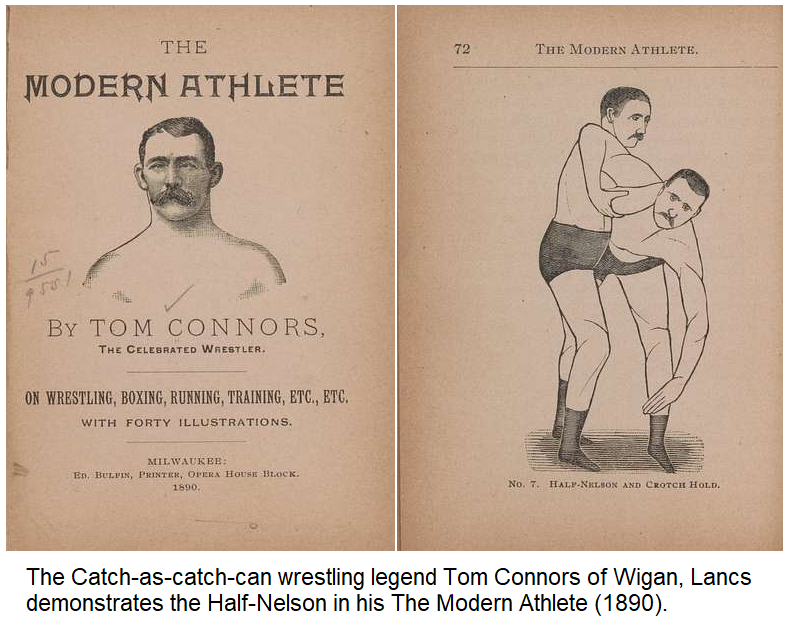
Catch wrestling, just like any other kind of wrestling, was historically seen as a game of two men in which you win exclusively on fair back falls. It was a most popular pastime of the Lancashire men as well, and the martial arts instead have a very different history from that of wrestling, and always served absolutely different purposes. These two have nothing in common and should not be compared. Tom Connors, the legendary catch wrestler from Wigan, Lancashire thus spoke about the new kind of pro wrestling, the All-in wrestling, in his 1930s interview:
“What do you think of all-in’ wrestling?“
“Pfph! ‘All-in’ wrestlin’s just rough an tumble fightin’ same as they used fight in Scholes when they ‘ad a bit o’bother! They used t’ say I was one o’ t’ cruellest opponents there was, but I say if you want to win you ‘as to be cruel. The other man should give in.”
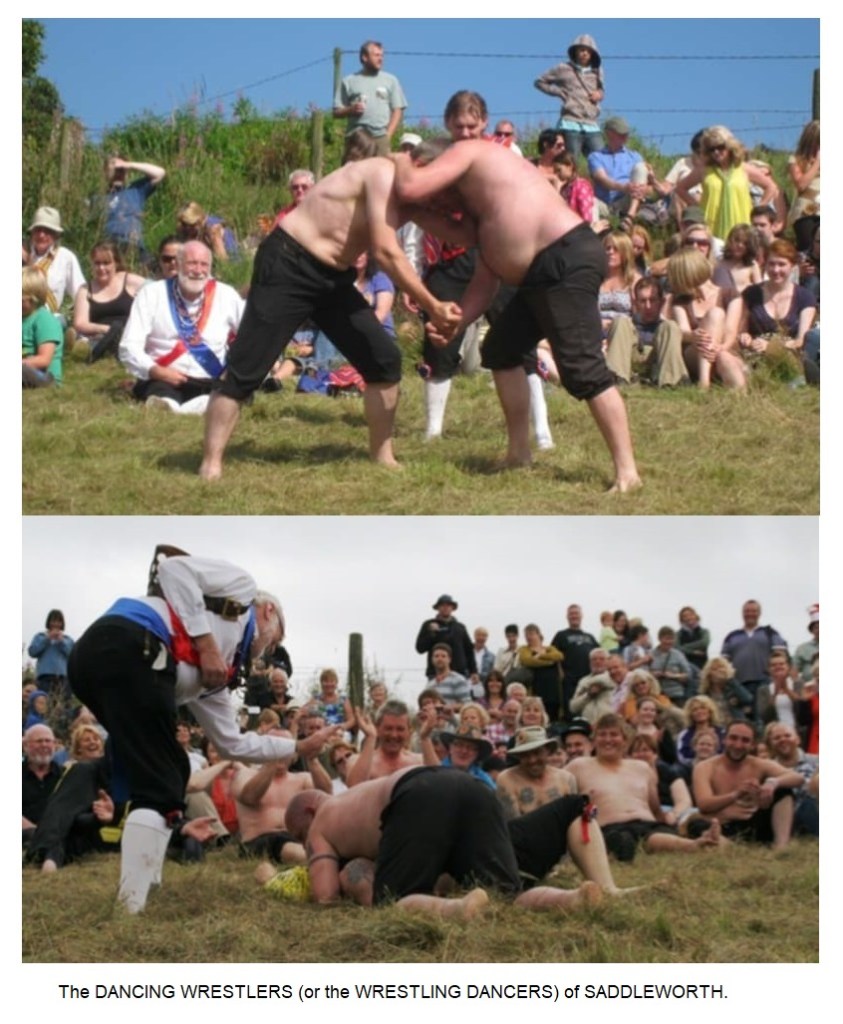
At this time the Lancashire catch-as-catch-can wrestling is not practiced anymore. The last attempt to revive traditional catch wrestling in its native lands, in the eastern parts of Lancashire and the West Yorkshire, was done in the late 1970s. In 1978-2019 there was held a championship knock-out tournament called the “Longwood Thump” which along with other old pastimes was part of an annual morris-dancers festival in Saddleworth, W. Yorks, known as the Rushcart. It was a freestyle wrestling competition, in which a fair back fall to decided the winner (both shoulders on the ground for the count of three, similar to the pro-wrestling back fall) open only to the morrismen from different parts of England who represented their ensembles at this great gathering. At some point, in the early 90s, that freestyle wrestling championship was decided in what was called the “Saddleworth Style” which was described as the “first one to hit the floor loses, best of 3 falls”. The tournament winner held a perpetual trophy the leather belt mounted with silver. The last champion was Jacob Frohawk-McLucas of “Rose and Castle Morris” (Stoke Bruerne, Northamptonshire). This competition was discontinued due to the numerous injuries sustained by participants of the wrestling matches.

18053
Made with WordPress
 Wrestling Heritage