
Wrestling Heritage welcomes memories, further information and corrections.

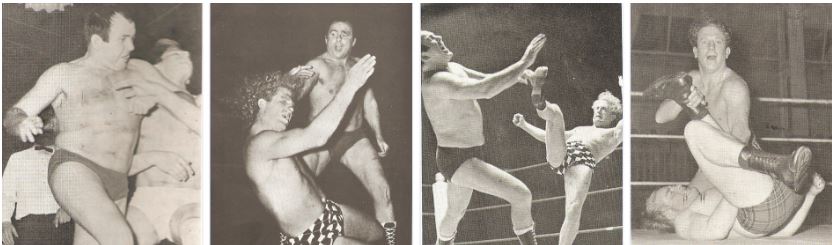
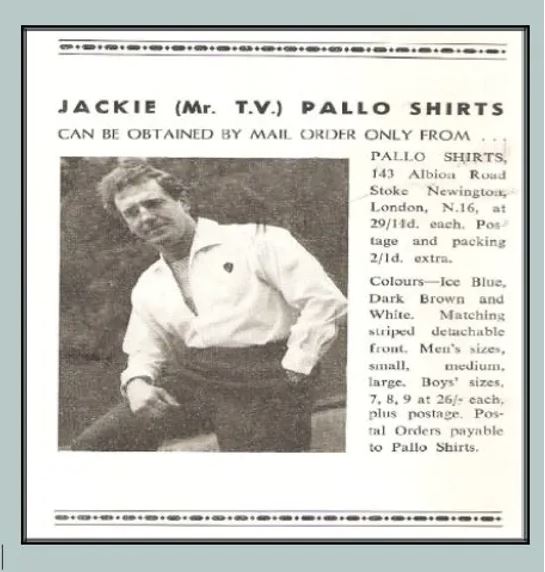
After McManus v Pallo III the pair’s fortunes diversified. Pallo lived out his Mr TV role to the full and quite literally made a name for himself.
But what about McManus? He was in fact, unbeknown to fans of the time, wielding power in the promoters’ office. He decided when he would acquire titles, and in fact he never ever accorded himself the indignity of losing the coveted Southern England Welterweight belt, and he remains its only ever title holder. The championship just evaporated as McManus eyed up national and European titles later in the decade.
He had to exert his office power also to determine the destiny of Jackie Pallo.
The first surprise was that a lid was immediately put on the in-ring feud and the pair would not face each other in a high profile match for a full 4 years. Few twenty-first century fans could comprehend this and would no doubt write it off as failing to make the most of promotional opportunities.
However, if we choose to accord McManus the respect of a professional always doing what was best for the business as a whole, his move, along with fellow Joint Promotions members, was perhaps wise. They developed McManus and Pallo as separate names, each capable of filling halls without the costly presence of the other.
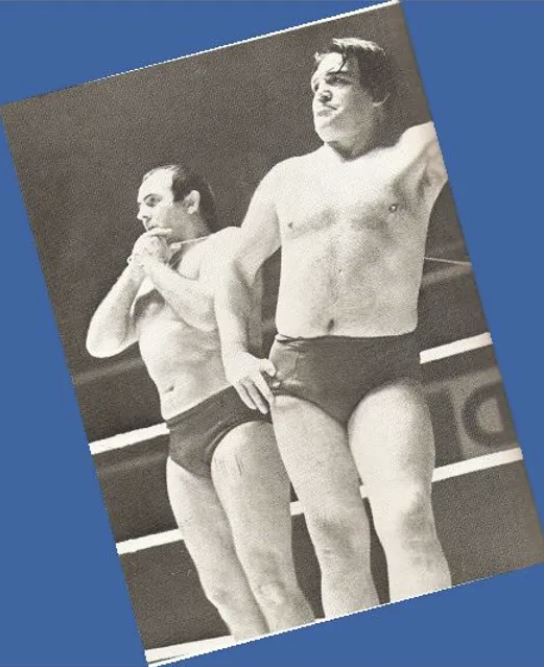
McManus diversified, creating a parallel high profile presence in the new-fangled tag alongside long-time partner, Iron Man Steve Logan. He worked hard on another real and bitter feud, and then cosy merger, with rival promoter Paul Lincoln. And he built his own celebrity status, rather more understated than the colourful antics of Pallo. McManus hob-nobbed it with society elite and aristocracy, and became a member of the showbiz charity club, the Lord’s Taverners.
He remained dedicated to professional wrestling at all times and in 1965, Wrestling Heritage can now reveal, changed his name by deed poll to become, officially, Mick McManus.
Pallo did not have such protection from the promoters’ office, understandably perhaps if his April 1962 challenge had been unscripted. Professional Wrestling was a never a business that had any scope to tolerate loose cannons.
Moreover, he found himself with only about five annual tv appearances in the mid-sixties – McManus enjoying more than double.
So Pallo, outside the ring, had to carve his own niche. He did so with some success but by 1966, even though wrestling fans were still chomping at the bit for McManus v Pallo IV, his presence within the general public perception was no longer fresh, and he regularly found his pigtailed barnet hitting the famous wrestling glass ceiling.
In January 1967 fate intervened in sensational fashion.
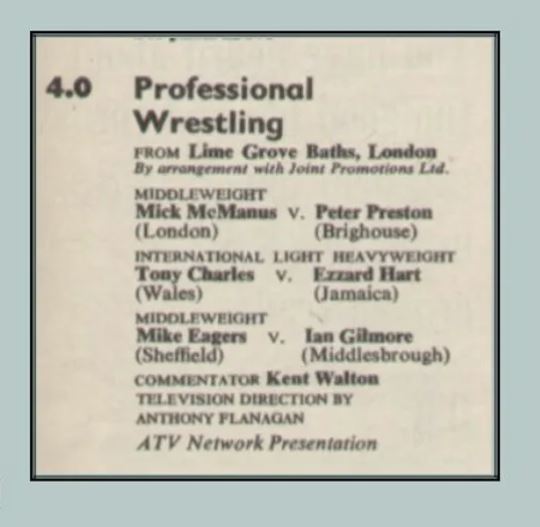
McManus’s first televised bout of the year was at Lime Grove, London, on a bill promoted by Bradford’s Norman Morrell. His opponent was Bradford’s Peter Preston, a tough and skilful ex-amateur heavy-middleweight to whom McManus conceded over a stone.
Going against all predictions and industry requirements, McManus was controversially and unscriptedly defeated for the first time ever on television, in a disqualification that he even managed to have faded out in the south of England transmission to spare his blushes. But news spread and Preston went on to become a giantkiller of note.
Furious, McManus hastily moved to deflect attention from his embarrassment and just a month later was embroiled in his famous late night televised showdown with Jackie Pallo on the Eamonn Andrews chat show. Pallo the loose cannon now seemed like the safe fellow pro and Londoner.
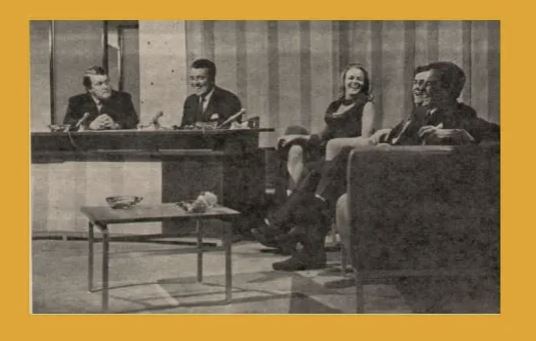
In angry exchanges McManus refused to share the stage with Pallo, ripping off his microphone and hurling abuse. Explosive stuff, delivered magnificently, and the scene was set for the third major bout between the pair, after four long years, right.
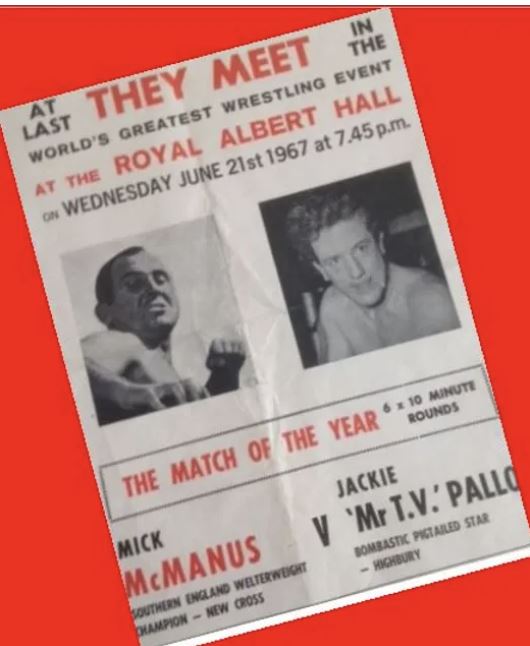
The referee this time was popular newbie after the promotional merger mentioned earlier, Max Ward. The venue was Europe’s finest. And there was no film!
The national press and their photographers thronged at ringside – and in the first minute of the bout Pallo found himself thrown from the ring only to land in their midst. McManus followed him to arena level where the brawl continued, and the uninitiated pressmen took flight!
Pallo McManus IV was finally third time lucky for the Pallo pile-driver, as Mr TV used it to take the opening fall over McManus in Round Three, having had it reversed on himself by McManus in 1962 and 1963.
However, it wasn’t Pallo’s trademark move magpie McManus wanted in 1967. This time he stole from Johnny Kwango and delivered a vicious head butt to Pallo in Round 4. At the faintest sight of blood, he moved in again for a series of further butts leaving referee Ward with no option but to stop the bout in favour of the New Cross man. This was scarcely a satisfactory conclusion for fans who had paid top dollar for such expensive ringside seats.
Once again the feud was put on hold, and in 1968 McManus tried to engender equivalent excitement from a newly generated feud between himself and Les Kellett which played out for audiences nationwide and at high profile venues.
However, the new obsession with inconclusive results in match-ups between top-of-the-bill stars ensured this new feud was dead in the water before it even took off.
Autumn 1967 saw a flurry of McManus v Pallo matches in the provinces, but the bout was till used only sparingly until closing for the decade at Belle Vue in their sole 1969 bout.
In the final instalment we’ll examine what seventies mileage was extracted from Wrestling’s Greatest feud.
 Wrestling Heritage