
Wrestling Heritage welcomes memories, further information and corrections
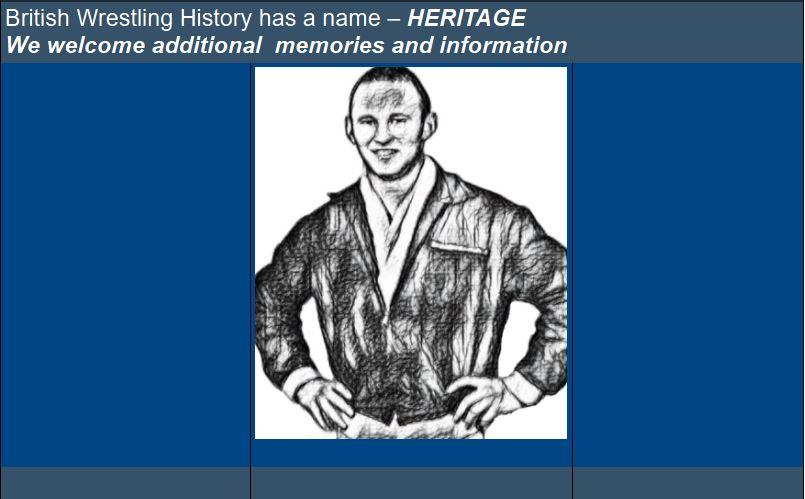
Another wrestler from agricultural stock, having learnt the ropes practsing moves on his father’s farm. Tony Elsdon was a popular welterweight who debuted around 1964. As a youngster he had watched the wrestling at St James Hall in Newcastle, where his favourite, and the man who inspired him to start wrestling was Norman Walsh.
Born in Northallerton he learned his wrestling trade at the St Lukes wrestling club in Middlesbrough alongside Ian Gilmour, Les Prest and Dicky Swales. Working at the time on his father’s farm meant that Tony was already very fit and strong.
St Lukes was a Psychiatric Hospital in Middlesbrough. It’s orgins lay in the days nurses at the club had begun a course of wrestling as a treatment for violent patients. The club was run along well disciplined lines. Members were presented with a membership card, badge and a handbook containing a strict set of rules that were adhered to strictly.
Regular attendance, reliability, a dress code and respect for other members and property were required or membership was revoked, requiring the return of the badge, membership card and handbook. It was good preparation for the youngsters to take up responsible roles in the adult world.
Club members put on professional style shows for local charities. They didn’t have a ring and simply placed mats on the concrete floor. They quickly learned how to fall correctly! Occasionally guest trainer at St Lukes was that childhood hero Norman Walsh.
Charity shows enabled Tony to get a couple of hundred bouts under his belt before turning professional. He was a skilful welterweight who worked regularly for Joint Promotions. Future success was limited by his bouts restricted to the local North East and Yorkshire, opponents that included Frank Robb, Peter Preston and Jim Breaks.
Wrestling commitments also had to share their time not just with farming but also Tony as a Special Police Constable, a volunteer force that performed duties at football matches, demonstrations, manhunts and wherever else extra manpower was required .
After half a dozen years of promise he seemed to abruptly disappear around 1970 to concentrate on his agricultural work with a large farm at Appleton Wiske, near Northallerton.
Page added 04/06/2023
990
.
 Wrestling Heritage