
The 1978 Kid recalls the time that Friday night was fight night down at the Liverpool Stadium
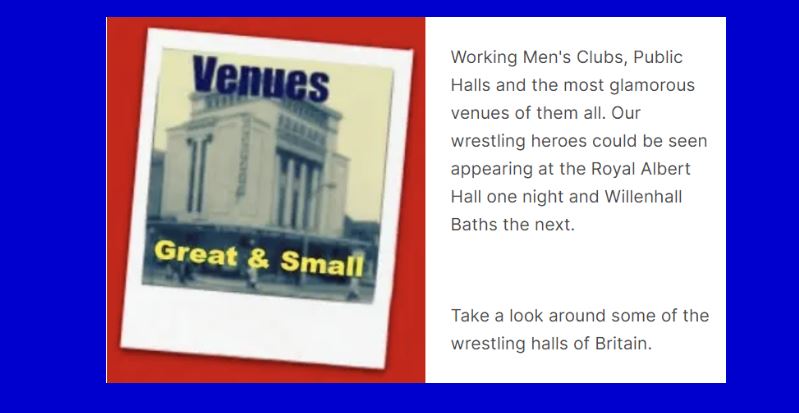

Liverpool Stadium came about through the inspiration of Johnny Best, a retired boxer who had become a promoter in the city. A boxing stadium previously stood on the corner of Pudsey Street and London Road. Best had promoted boxing there during its final years. When it was demolished in 1931, Best was determined that a new Stadium should be built.
The site chosen was on St Paul’s Square, at the top of Bixteth Street and close to Exchange Station. The land was owned by the LMS Railway company and had previously been the site of St Paul’s Church. The Bishop of Liverpool had to give permission for graves to be moved from the site. Some objected to the building of a boxing stadium on consecrated ground. Others from the business community felt that it would bring down the tone of the area around an important railway station. However, planning permission was granted and the building was built in just 8 months during 1932.
The new Liverpool Stadium building had a steel structure with grey brickwork and a distinctive facade with the name “Stadium” emblazoned high above the entrance. Inside, the visible metal roof supports, bare floor and 5,000 hard wooden tip up seats gave the building a rough feel, well suited to the action in the ring. It was owned by Liverpool Stadium Ltd, whose managing director was Johnny Best.
Thursday 20th October 1932 was the opening night at Liverpool Stadium, (Thursday night was always known as boxing night in Liverpool). For the opening ceremony the distinguished guests included the Lord Mayor of Liverpool along with the Mayors of Bootle, Southport, Birkenhead, Chester and Wrexham. Weekly boxing contests continued at the Stadium during the war years, with World Heavyweight Champion Joe Louis taking part in an exhibition match to entertain the US troops stationed in the area.
It is unclear when the first wrestling tournaments were held at the Stadium. Certainly by 1951 Friday night was wrestling night each week, with regulars on the bills including Jack, Harry and Dominic Pye, Emile Poilve, Vic Hessle, Francis St Clair Gregory, Jim Hussey and Norman Walsh. Wrestling at the Stadium developed a large and loyal following and a high proportion of Liverpudlians born before the mid 1960’s have fond memories of Friday nights spent there.
During the 1950’s and 1960’s it was income from wrestling and rock music events that enabled the Stadium to remain in business, as boxing tournaments declined and went from being weekly to fortnightly to three weekly and even suspended altogether for long periods. Redevelopment in the city centre and the movement of people from inner city terraced housing to new estates on the fringes of the city seemed to keep the boxing fans away, whilst the wrestling fans were willing to travel to see their ring favourites at the Stadium. At this time wrestling was still going strong each week with stars like Tibor Szakacs, Albert Wall, Kendo Nagasaki, the Royals, the Borgs, and a young Mark Rocco filling the bills promoted by Bill Best.
Liverpool Stadium was rarely used as a venue for ITV wrestling recordings, possibly there were reasons why this was not found to be a suitable venue for TV tapings. The last time it was used for a Television show was in February 1971, with a strong bill including Tony Charles, Alf Cadman, Mick McManus, Johnny Williams, Masambula, Steve Haggetty, Pete Stewart, Billy Howes and Pete Roberts.
There was something of a revival of the Stadium as a boxing venue during the mid 1970’s culminating in a World Light Heavyweight Championship match between local champion John Conteh and challenger Len Hutchins on 5th March 1977. The funds raised from this match enabled some long needed upgrading to seating and toilet facilities at the Stadium. This roughly coincided with a change of wrestling promoters at the Stadium from Best/Wryton (members of Joint Promotions) to Wrestling Enterprises of Birkenhead (a company independent from Joint Promotions).
Wrestling Enterprises was owned and run by Brian Dixon, who had been a referee and second at the Stadium and had run the A to Z fan club before trying his hand at promoting . The first Wrestling Enterprises show at the Stadium on 17th June 1977 gave a taste of things to come. Women wrestlers made their debut, with Brian’s wife Mitzi Mueller facing Lolita. Stars who had left Joint Promotions were in evidence as Jackie “Mr TV” Pallo, Jackie Pallo Junior, Johnnie Kincaid and Hans Streiger graced the bill. Over the next 5 years Brian Dixon promoted genuinely exciting bills at the venue, weekly (until August 1981) and later fortnightly. Fans were thrilled as a succession of former TV Stars (including Amazing Kung Fu, Mighty John Quinn and Tony St Clair) signed with Brian Dixon and then appeared in Stadium matches which were a far cry from the somewhat toned down encounters demanded by the TV authorities. At the same time up and coming stars like Dave Finlay and Frank Cullen learned their trade in the Liverpool ring.
On Friday 19th May 1978 a twelve year old boy named Robert Edward Brooks attended Liverpool Stadium for the first time. The occasion was a one night 8 man knockout tournament for the vacant World Middleweight Championship. By the end of the night Jon Cortez had been crowned champion and Robert Brooks had been set on the road to becoming Robbie Brookside – a leading British wrestling star of the 1990’s and into the next millennium. Robbie returned to the Stadium as a competitor in late 1983 and early 1984.
On 10th April 1981 a World Heavyweight Championship match took place at the Stadium when Canadian John Quinn, who had defected from Joint Promotions rings with the belt, defended the title against Tony St Clair. The result was a “no contest” with Quinn retaining belt but St Clair stating he was willing to fight Quinn for the title any time, any place, including in the pub over the road from the Stadium (the Cross Keys).
By 1982 wrestling at the Stadium was following the same downward trend as boxing had done, with dwindling crowds and tournaments reduced to fortnightly. Rumours of the sale and demolition of the building did not help. After Brian Dixon withdrew from promoting at the Stadium in Autumn 1982, Dale Martin staged a few shows in early 1983. The final burst of wrestling action took place when Brian Dixon returned with monthly tournaments in late 1983 and early 1984. The last wrestling night at the Stadium appears to have been Friday 16th March 1984 when the bill was topped by another World Heavyweight Championship defence from John Quinn. This time his opponent was the man he had deposed to take the belt – Wayne Bridges. Quinn emerged victorious bringing to an end a very special era in British wrestling. Occasional boxing tournaments continued to be held at the Stadium until 3rd October 1985, which at the time no one knew would be the “last night at the Stadium”. After years of neglect, a structural report released on 4th February 1987 confirmed that the building was now unsafe and it was demolished very soon afterwards.
In the years that have followed the demolition of the Stadium, wrestling has taken place at other venues in Liverpool, including Everton Park Sports Centre, The Olympia and St George’s Hall. WWE has presented wrestling at the Liverpool Echo Arena, opened in 2008. However, none of these venues has been able to capture the unique atmosphere of a Friday night’s wrestling at Liverpool Stadium.
Some of the information used in this article has been taken from Liverpool’s Boxing Venues by Ray Physick published 2008 by Trinity Mirror Sport Media PO Box 48, Old Hall Street, Liverpool, L69 3EB
 Wrestling Heritage